01 / 这个地方的历史
由隐居传统塑造的地方
三千院属于一种把贵族、皇室关系与佛教修行结合起来的寺院传统。大原的山地环境使这里成为祈祷、学习和隐居之地。今天的参观体验由深色木构、苔藓庭园和季节光线共同构成。这里的历史不只在某一座宏伟建筑中,也在庭园要求游客放慢脚步的节奏里。
02 / 建议参观顺序
让庭园带出寺院历史
03 / 景点内部看什么
景点内部看什么
01 Imperial Gate
御殿门
The first threshold into the monzeki temple grounds.
这个地方的历史
The entrance preserves the temple's historical association with aristocratic and imperial Buddhist lineages.
现场留意
- 01
Notice the controlled scale of the entrance.
- 02
Look at the timber and roof details.
- 03
Check the current visitor route.
02 Kyakuden
客殿
A reception space that frames the garden from inside.
这个地方的历史
The hall connects formal hospitality with the temple's practice of viewing landscape through a quiet interior threshold.
现场留意
- 01
Look from the tatami edge toward the garden.
- 02
Notice the change between interior shadow and moss light.
- 03
Keep the room silent.
03 Shinden
宸殿
A formal hall that introduces the temple's monzeki character.
这个地方的历史
The hall reflects the temple's connection with aristocratic and imperial Buddhist culture.
现场留意
- 01
Notice the formal proportions.
- 02
Look out toward the garden rather than only at the room.
- 03
Observe the relationship between tatami and view.
04 Shuheki-en
聚碧园
A garden that opens the visit into water, stone and seasonal planting.
这个地方的历史
The garden is part of Sanzen-in's long tradition of combining devotional space with carefully composed retreat landscapes.
现场留意
- 01
Notice water beside moss and stone.
- 02
Compare the open pond with the darker garden path.
- 03
Look for framed views between trees.
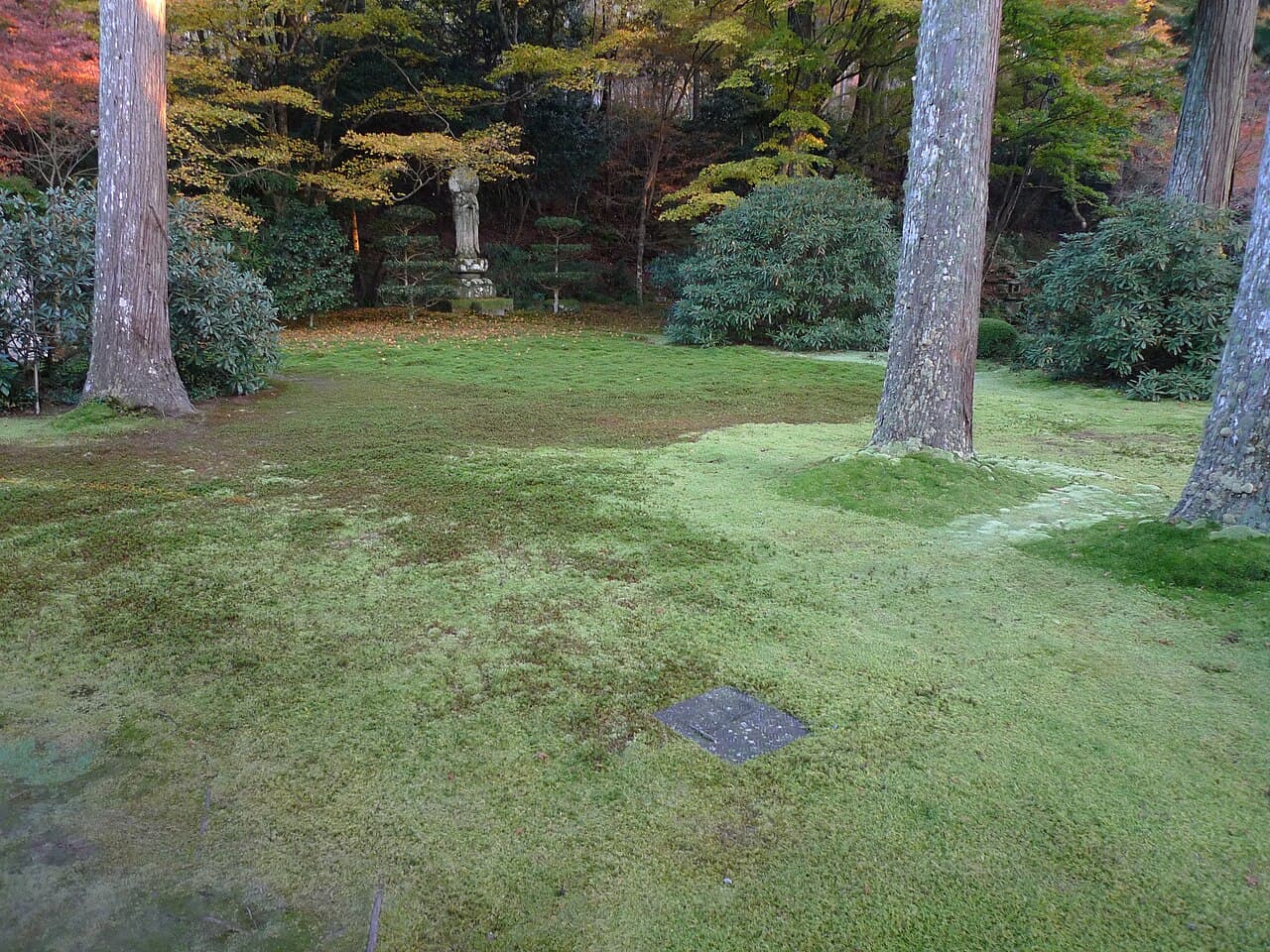
05 Yuusei-en
有清园
A moss garden beneath tall trees.
这个地方的历史
The garden's quiet character comes from long-term shade, moisture and careful maintenance rather than decorative excess.
现场留意
- 01
Look for multiple greens, not one color.
- 02
Notice the ground as carefully as the trees.
- 03
Move slowly around the edge.
06 Ojo Gokuraku-in
往生极乐院
A small hall with an intimate devotional scale.
这个地方的历史
The hall is associated with Pure Land belief and gives the garden a human-sized spiritual center.
现场留意
- 01
Notice the low roof and compact scale.
- 02
Study the approach through the trees.
- 03
Keep the entrance clear.
07 Amida Sanzon
阿弥陀三尊
The devotional image group associated with Ojo Gokuraku-in.
这个地方的历史
The triad gives the small hall its religious focus and connects the intimate building to Pure Land Buddhist practice.
现场留意
- 01
Check current photography rules.
- 02
Observe the image from the permitted position.
- 03
Keep the hall quiet.
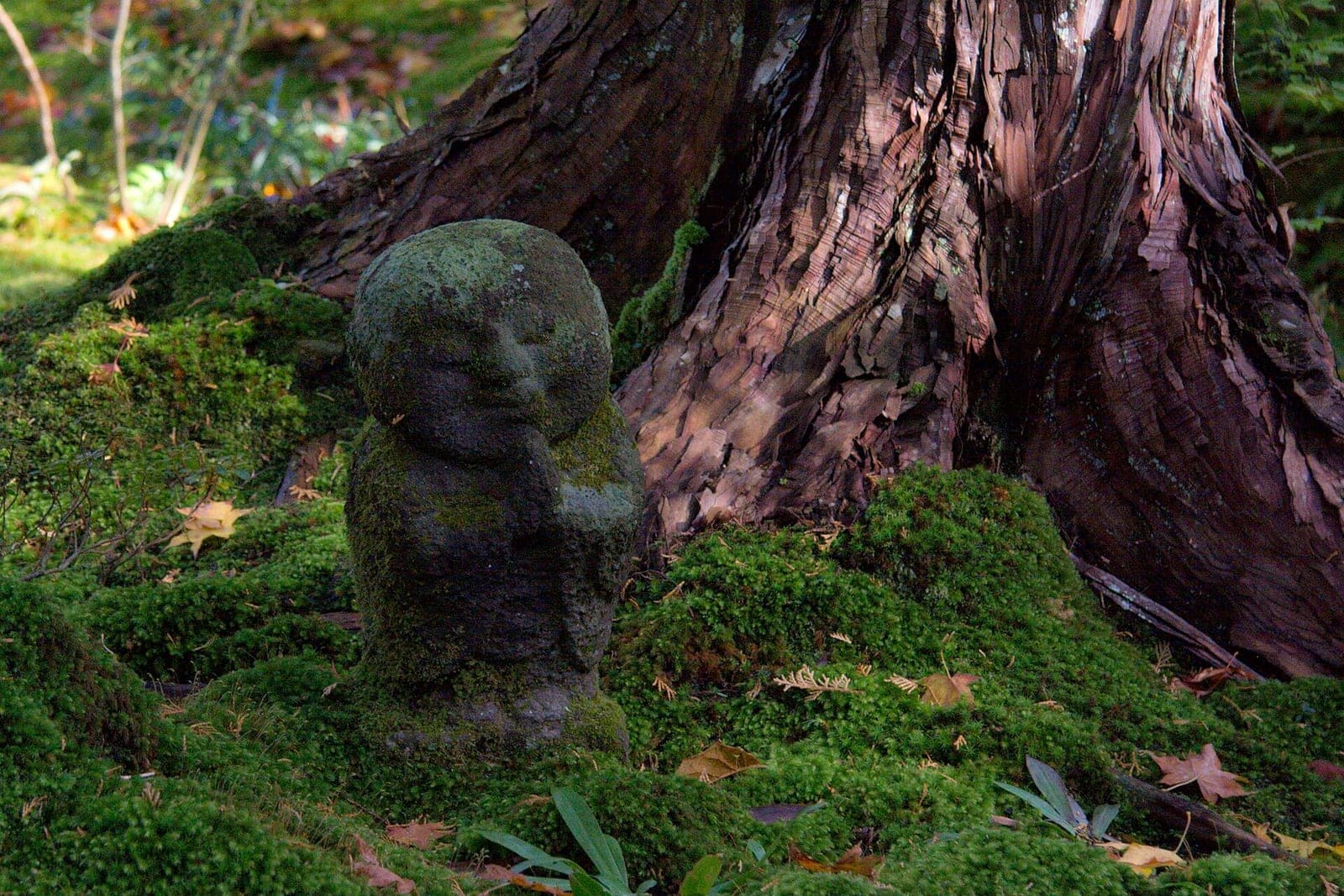
08 Warabe Jizo
苔藓地藏
Small figures set within the moss landscape.
这个地方的历史
The figures connect everyday devotion with the contemplative garden setting.
现场留意
- 01
Look for the contrast of stone and moss.
- 02
Notice different expressions and scale.
- 03
Do not touch or move offerings.
09 Koke no Michi
苔庭小径
A path where moisture and shade shape the visual rhythm.
这个地方的历史
The path reflects the mountain climate that made Ohara a place of retreat.
现场留意
- 01
Notice water, shade and stone together.
- 02
Listen for small changes in sound.
- 03
Avoid stepping off the route.
10 Takebayashi
竹林
A narrow grove that changes the sound and scale of the garden.
这个地方的历史
Bamboo and cedar reinforce the sense of a mountain retreat where managed grounds meet the surrounding woodland.
现场留意
- 01
Notice the vertical rhythm.
- 02
Listen for wind through the leaves.
- 03
Stay on the marked path.
11 Momiji Grove
季节红叶林
Trees that make the same garden change through the year.
这个地方的历史
Seasonal viewing has long shaped how Japanese gardens are experienced and remembered.
现场留意
- 01
Compare new leaves, deep green and autumn color.
- 02
Look at light on the trunks.
- 03
Return mentally to the same view in another season.
04 / 官方资料