01 / 这个地方的历史
一座需要被读懂的居所
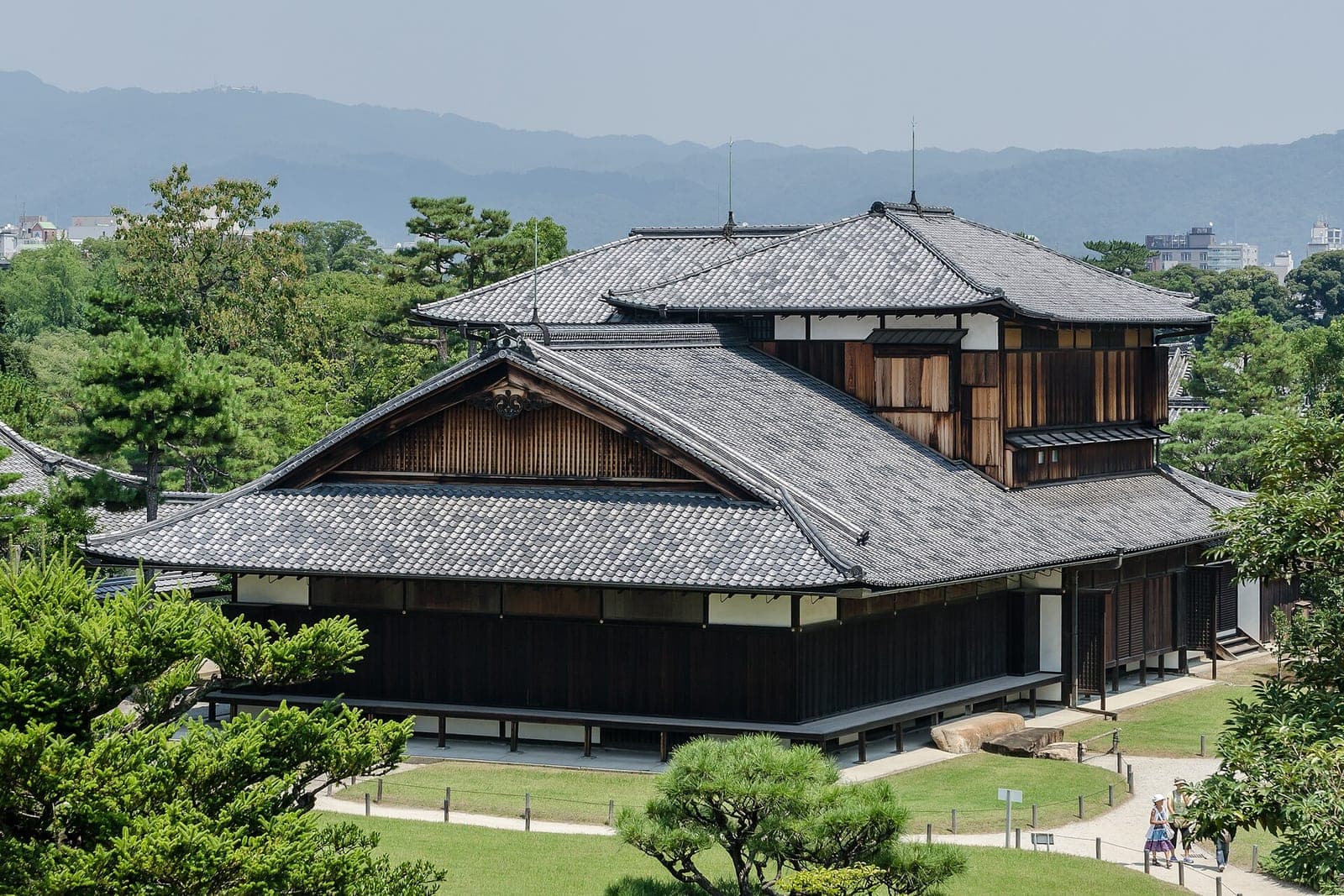
二条城由德川家康建造,既是幕府在京都的据点,也是展示将军权力的舞台。它通过一连串空间来表达权力:正式城门、被控制的动线、等级逐渐提高的房间,以及精心布置的障壁画。后来,幕府结束也在这里被宣布,使同一组建筑拥有第二层政治意义。参观时可以把它理解为一套关于进入、等级和可见性的空间编排。
02 / 建议参观顺序
沿城堡的权力顺序参观
03 / 景点内部看什么
景点内部看什么
01 Higashi Ote-mon
东大手门
The main entrance where movement into the castle was controlled.
这个地方的历史
The gate's scale and layered defensive form express the castle's official character rather than a private residence.
现场留意
- 01
Notice the depth of the gate passage.
- 02
Look for lines of sight across the approach.
- 03
Imagine arrivals being observed and announced.
02 Karamon
唐门
A richly decorated gate between the outer grounds and palace area.
这个地方的历史
Its ornament signals that the visitor is moving from defense into ceremony and formal reception.
现场留意
- 01
Study the layered carvings and white-and-gold contrast.
- 02
Notice how the gate frames the palace beyond.
- 03
Look up before walking through.
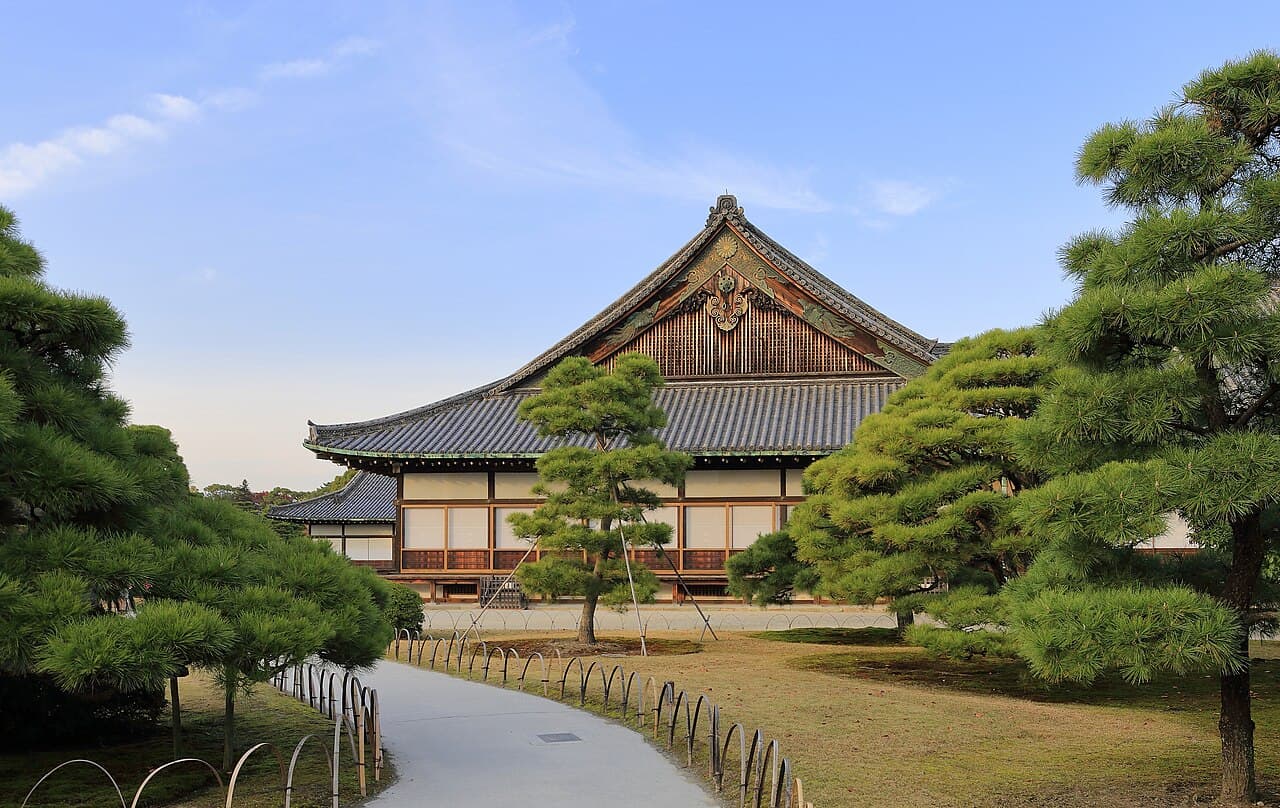
03 Ninomaru-goten
二之丸御殿
A sequence of reception rooms with painted walls and ceilings.
这个地方的历史
The rooms were arranged by rank. The shogun's position, the visitor's path and the painted subjects all communicated hierarchy.
现场留意
- 01
Compare room size and decorative detail.
- 02
Notice the animals and plants in the paintings.
- 03
Move slowly because the sequence matters.
04 Shikidai
式台
An official reception space within the palace sequence.
这个地方的历史
The room's position helped distinguish formal reception from the private and more restricted rooms deeper inside.
现场留意
- 01
Notice the change in room scale.
- 02
Look for painted surfaces and thresholds.
- 03
Follow the one-way visitor route.
05 Ohiroma
大広间
The principal formal hall for high-level audiences.
这个地方的历史
The hall made political hierarchy visible through position, distance and the arrangement of the audience space.
现场留意
- 01
Read the room from the center axis.
- 02
Notice the relation between floor level and rank.
- 03
Look at the painted panels without touching the rails.
06 Kuro-shoin
黑书院
A more private reception space for closer audiences.
这个地方的历史
The change from grand public rooms to a smaller interior reveals how the palace separated official display from private counsel.
现场留意
- 01
Compare the decoration with the Grand Hall.
- 02
Notice the lower-key atmosphere.
- 03
Keep the flow moving through the rooms.
07 Shiro-shoin
白书院
The most private section of the Ninomaru Palace route.
这个地方的历史
Its position at the end of the sequence reflects the increasing privacy and status of the rooms within the shogunal residence.
现场留意
- 01
Notice the shift toward domestic scale.
- 02
Look for views toward the garden.
- 03
Observe the room boundary from the corridor.
08 Uguisubari
莺声地板
Floorboards that make a soft chirping sound underfoot.
这个地方的历史
The sound was an early security device, turning footsteps into an audible signal inside the residence.
现场留意
- 01
Walk at a natural pace and listen.
- 02
Notice how sound changes with the room.
- 03
Avoid testing the floor loudly.
09 Ninomaru Teien
二之丸庭园
A garden arranged as a formal view from the palace rooms.
这个地方的历史
The garden's stones, islands and borrowed landscape were composed for ceremonial observation and changing seasonal views.
现场留意
- 01
Look from the building before walking the path.
- 02
Notice the balance of stone, water and clipped trees.
- 03
Observe the garden as a framed scene.
10 Honmaru
本丸区域
The inner compound with a later palace and elevated ground.
这个地方的历史
The inner compound was reshaped after fire and later use, showing how the site continued to change beyond its first political purpose.
现场留意
- 01
Notice the difference from Ninomaru.
- 02
Look across the moat and walls.
- 03
Keep the later layers in mind.
11 Honmaru Goten
本丸御殿
The later palace within the inner compound.
这个地方的历史
The palace represents a later layer of the site and is subject to changing access and opening arrangements.
现场留意
- 01
Check current opening information.
- 02
Notice the different period and scale.
- 03
Do not enter closed areas.
12 Tenshu-dai
天守阁遗址
The elevated site where the castle tower once stood.
这个地方的历史
The remaining base makes absence visible: the castle's defensive skyline changed even as the wider compound survived.
现场留意
- 01
Look over the surrounding walls.
- 02
Notice the change in elevation.
- 03
Use the viewpoint without blocking the path.
13 Hori and Ishigaki
护城河与石墙
The defensive landscape that gives the castle its structure.
这个地方的历史
Moats, walls and controlled gates made the castle legible as a protected seat of authority even within the city.
现场留意
- 01
Read the stonework in changing light.
- 02
Notice how water slows movement.
- 03
Compare public and restricted edges.
04 / 官方资料