01 / 这个地方的历史
从离宫到禅宗中心
南禅寺的前身是离宫,13世纪末改建为禅寺。后来它成为临济宗的重要寺院。建筑经历火灾与重建,但寺院仍保留开阔布局,让山门、塔头、庭园和山间空气共同存在。后来的红砖水路阁为这里增加了近代历史层次,却没有抹去原有的禅寺结构。
02 / 建议参观顺序
从宏大尺度走向细部庭园
03 / 景点内部看什么
景点内部看什么
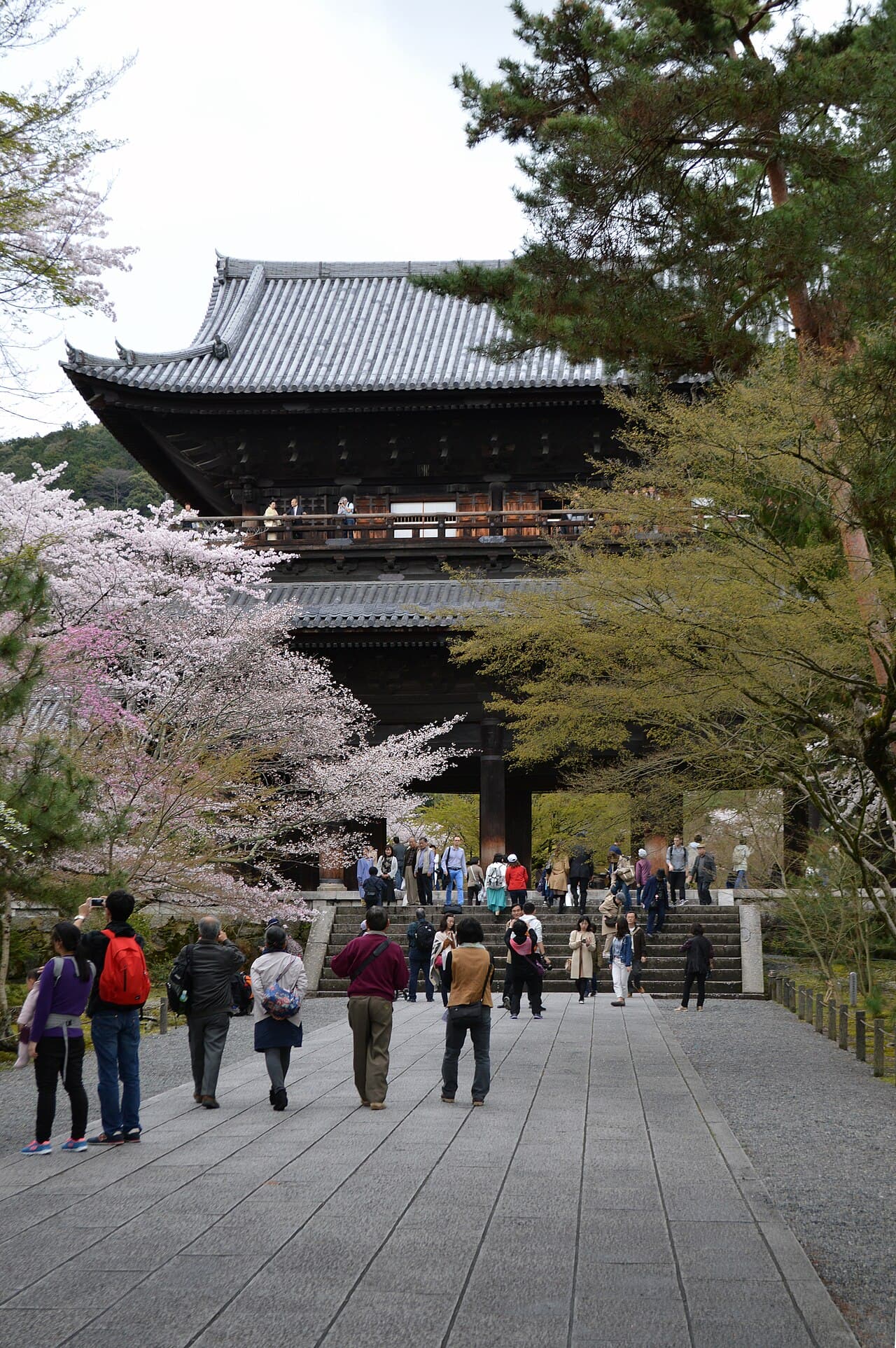
01 Sanmon
三门
A monumental gate that sets the scale of the temple.
这个地方的历史
The gate was rebuilt in the early Edo period and became associated with both authority and literary memory.
现场留意
- 01
Look up through the massive timber frame.
- 02
Notice the broad stone approach.
- 03
Compare the human scale with the roof.
02 Hatto
法堂
The temple hall used for Zen teaching and ceremonies.
这个地方的历史
The hall expresses Nanzen-ji's role as a major Rinzai Zen institution and remains an important internal landmark of the precinct.
现场留意
- 01
Notice the broad roof and quiet forecourt.
- 02
Check current access and photography rules.
- 03
Keep the approach clear.
03 Hojo
方丈
The abbot's quarters and the interior setting for the temple's principal garden.
这个地方的历史
The Hojo links Zen residence, teaching and garden viewing in one architectural sequence.
现场留意
- 01
Notice the veranda-to-garden threshold.
- 02
Compare formal rooms with open garden space.
- 03
Follow the one-way route.
04 Hojo Garden
方丈庭园
A Zen garden arranged for contemplation from the abbot's hall.
这个地方的历史
The garden uses stones, gravel and carefully limited planting to create a field of relationships rather than a scenic panorama.
现场留意
- 01
Read the composition from one fixed point.
- 02
Notice empty space between stones.
- 03
Resist searching for one literal picture.
05 Suiro-kaku
水路阁
A red-brick aqueduct carrying water through the temple grounds.
这个地方的历史
Built in the Meiji period as part of the Lake Biwa Canal project, it shows how modern infrastructure entered a historic religious landscape.
现场留意
- 01
Observe the brick arches and water channel.
- 02
Notice the contrast with timber architecture.
- 03
Look at how the structure follows the slope.
06 Nanzen-in
南禅院庭园
A smaller garden with pond, moss and a more intimate mood within the temple precinct.
这个地方的历史
The garden preserves the memory of the site before the larger temple complex took its current form.
现场留意
- 01
Notice the enclosed scale.
- 02
Compare water and moss with the dry garden.
- 03
Look for a slower transition between rooms and trees.
07 Tenju-an
天授庵庭园
A sub-temple garden combining dry and planted spaces within the Nanzen-ji grounds.
这个地方的历史
Its layout reflects the long development of Zen sub-temples as places of practice, residence and garden culture.
现场留意
- 01
Compare the two garden moods.
- 02
Notice the relation between threshold and view.
- 03
Check seasonal opening information.
04 / 官方资料