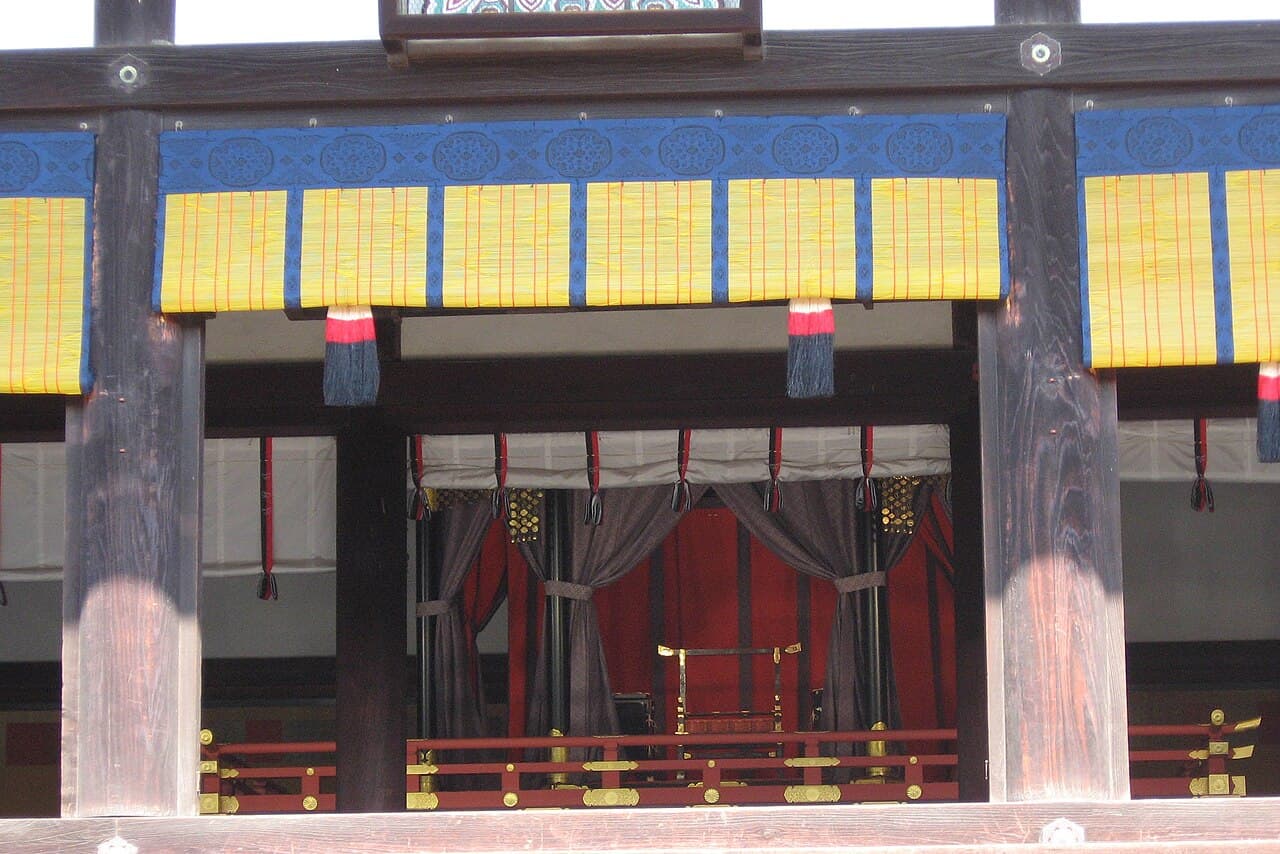
01 / 这个地方的历史
在重建中维持连续性
京都御所数百年来一直是朝廷运作的中心。火灾、仪式和政治结构变化使建筑不断重建,但形式、礼仪与空间秩序又被谨慎延续。理解京都御所的关键是理解一套层层递进的门槛:外门、正式庭院、朝会殿堂、庭园与内向空间,都对应不同程度的进入权限与礼仪。
02 / 建议参观顺序
沿皇宫的空间层级参观
03 / 景点内部看什么
景点内部看什么
01 Seishomon
清所门
A formal gate that introduces the palace's controlled access.
这个地方的历史
The gates separated ceremonial space from the surrounding city and made the hierarchy of arrival visible.
现场留意
- 01
Notice the roof and painted details.
- 02
Look along the wall line.
- 03
Imagine processions rather than casual entry.
02 Shishinden
紫宸殿
The principal ceremonial hall of the palace.
这个地方的历史
The hall was used for major court ceremonies and represents the formal center of imperial architecture in Kyoto.
现场留意
- 01
Read the building's long horizontal line.
- 02
Notice the open forecourt.
- 03
Look at the relationship between hall and trees.
03 Seiryoden
清凉殿
A building associated with the everyday and ceremonial life of the court.
这个地方的历史
The hall preserves a different scale from the main ceremonial center and helps explain the variety of court spaces.
现场留意
- 01
Compare its scale with Shishinden.
- 02
Notice roof proportions and layered verandas.
- 03
Imagine different forms of court use.
04 Oike-niwa
御池庭
A pond garden that softens the geometry of the palace grounds.
这个地方的历史
The garden allowed movement, seasonal viewing and controlled encounters with nature within a highly ordered court environment.
现场留意
- 01
Notice the pond edge and stepping stones.
- 02
Look at the balance of open and planted space.
- 03
Follow the garden's walking logic.
05 Ogakumonjo
御学问所
A study and meeting space with a more intimate character.
这个地方的历史
Buildings like this show that court culture included learning, discussion and private routine alongside state ceremony.
现场留意
- 01
Notice the smaller room scale.
- 02
Look at the view from the veranda.
- 03
Pay attention to surfaces and thresholds.
06 Gates and Corridors
门与回廊
The repeated thresholds that organize movement through the grounds.
这个地方的历史
Court hierarchy was made physical through who could pass which gate and how each space connected to the next.
现场留意
- 01
Trace the axis between gates.
- 02
Notice changes in roof and pavement.
- 03
Read doors as social boundaries.
07 Seasonal View
季节庭园景观
A landscape designed to change with flowering, leaves, snow and light.
这个地方的历史
Seasonal observation was central to court culture, so the gardens were planned as calendars as much as scenery.
现场留意
- 01
Look for the season's strongest color.
- 02
Notice how weather changes the same building.
- 03
Return in another season if possible.
04 / 官方资料