01 / 这个地方的历史
从山庄到寺院
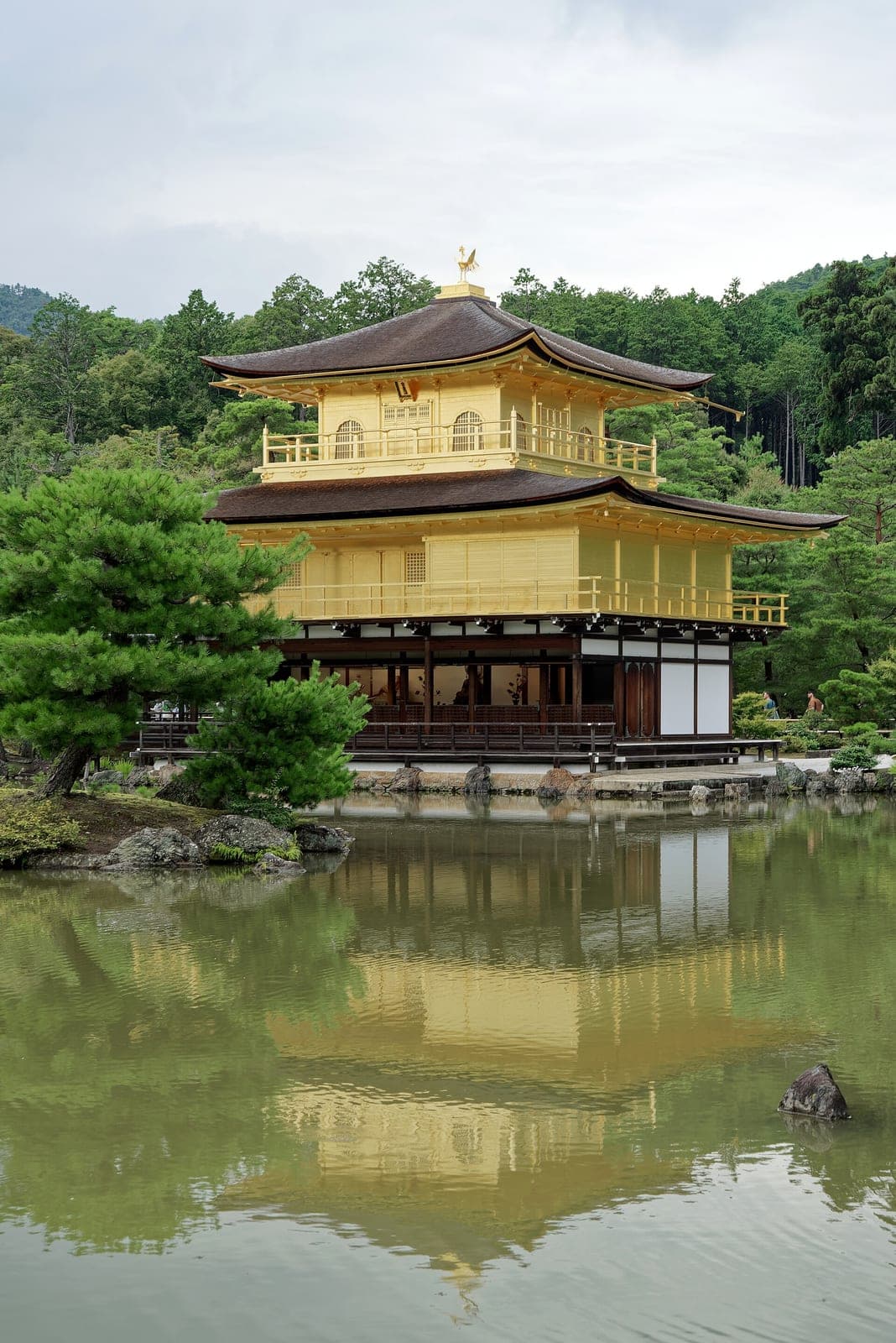
金阁寺最初是足利义满的北山山庄,体现了室町时代上层社会的文化与权力。义满去世后,山庄改为禅寺。楼阁三层使用了不同建筑语言,把社会秩序与宗教秩序压缩在一座建筑中。池水中的倒影当然经过精心构图,但这里更重要的历史,是这片场所用途的变化。
02 / 建议参观顺序
把楼阁、池水与庭园放在一起看
03 / 景点内部看什么
景点内部看什么
01 Rokuhara Entry
庭园入口
The path that reveals the pavilion gradually rather than all at once.
这个地方的历史
The approach turns the garden into a sequence of controlled views, a key feature of Japanese landscape design.
现场留意
- 01
Notice what remains hidden at first.
- 02
Watch the path curve before the pond opens.
- 03
Keep the route moving.
02 Kyoko-chi
镜湖池
The water surface that holds the pavilion's most famous reflection.
这个地方的历史
The pond is the compositional center of the garden and a mirror for both building and seasonal landscape.
现场留意
- 01
Look for islands and stones around the water.
- 02
Notice how wind changes the image.
- 03
Compare direct view and reflection.
03 Kinkaku
金阁
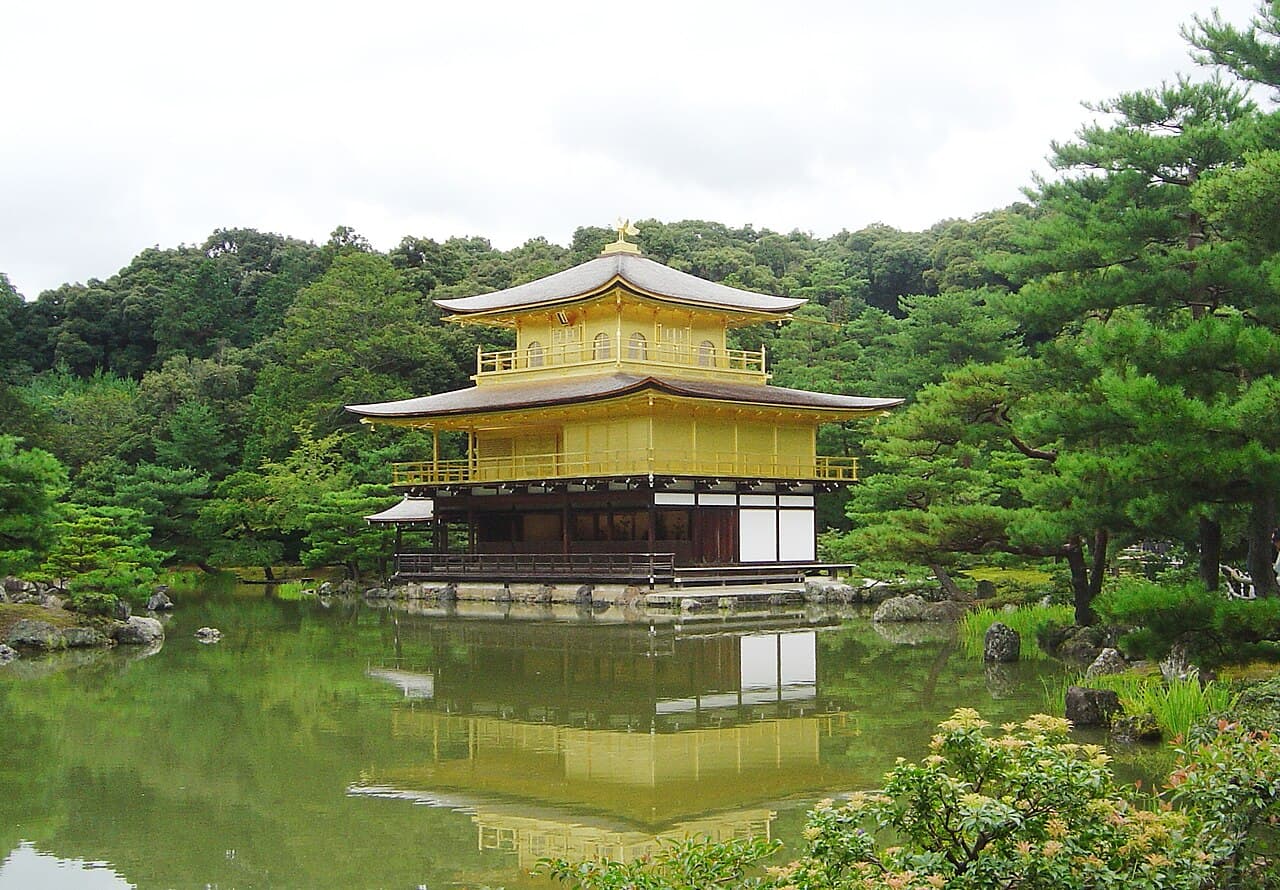
A three-story pavilion with three distinct architectural expressions.
这个地方的历史
The layers combine palace, samurai and Zen architectural languages, while the gold surface amplifies light and prestige.
现场留意
- 01
Read each level separately.
- 02
Notice the roof finial and phoenix.
- 03
Look for light changing across the gold leaf.
04 Anmintaku
安民泽
A quieter garden element beyond the main pond.
这个地方的历史
The smaller water feature and surrounding trees show that the site was designed as a full walking garden, not only a single viewpoint.
现场留意
- 01
Notice the change in visual temperature.
- 02
Look for the smaller scale of the scene.
- 03
Listen for the garden's quieter sounds.
05 Garden Path
庭园出口
The final stretch where the image of the pavilion begins to recede.
这个地方的历史
A walking garden is also a sequence of leaving. The later path turns attention back toward trees, stone and human movement.
现场留意
- 01
Look back only once.
- 02
Notice how the gold disappears behind planting.
- 03
End without rushing to the next stop.
04 / 官方资料