01 / 이 장소의 역사
The temple as a teaching system
To-ji was one of the temples guarding the southern entrance to Heian-kyo. In the ninth century it became closely associated with Kukai and Shingon Buddhism. The temple's central sculpture arrangement is not random decoration: it gives physical form to a Buddhist cosmology. The pagoda, lecture hall and sculpture halls should be read together as a system of protection, teaching and ritual presence.
02 / 추천 관람 순서
Read the precinct from outside in
03 / 안에서 볼 것
안에서 볼 것
01 Higashimon
East Gate
A practical entry point into a temple with an imperial-city origin.
이 장소의 역사
The temple began as a guardian institution at the edge of the capital, so its gates and open grounds matter to its history.
눈여겨볼 점
- 01
Notice the wide precinct beyond the gate.
- 02
Look for the axis toward the pagoda.
- 03
Let the open space set the scale.
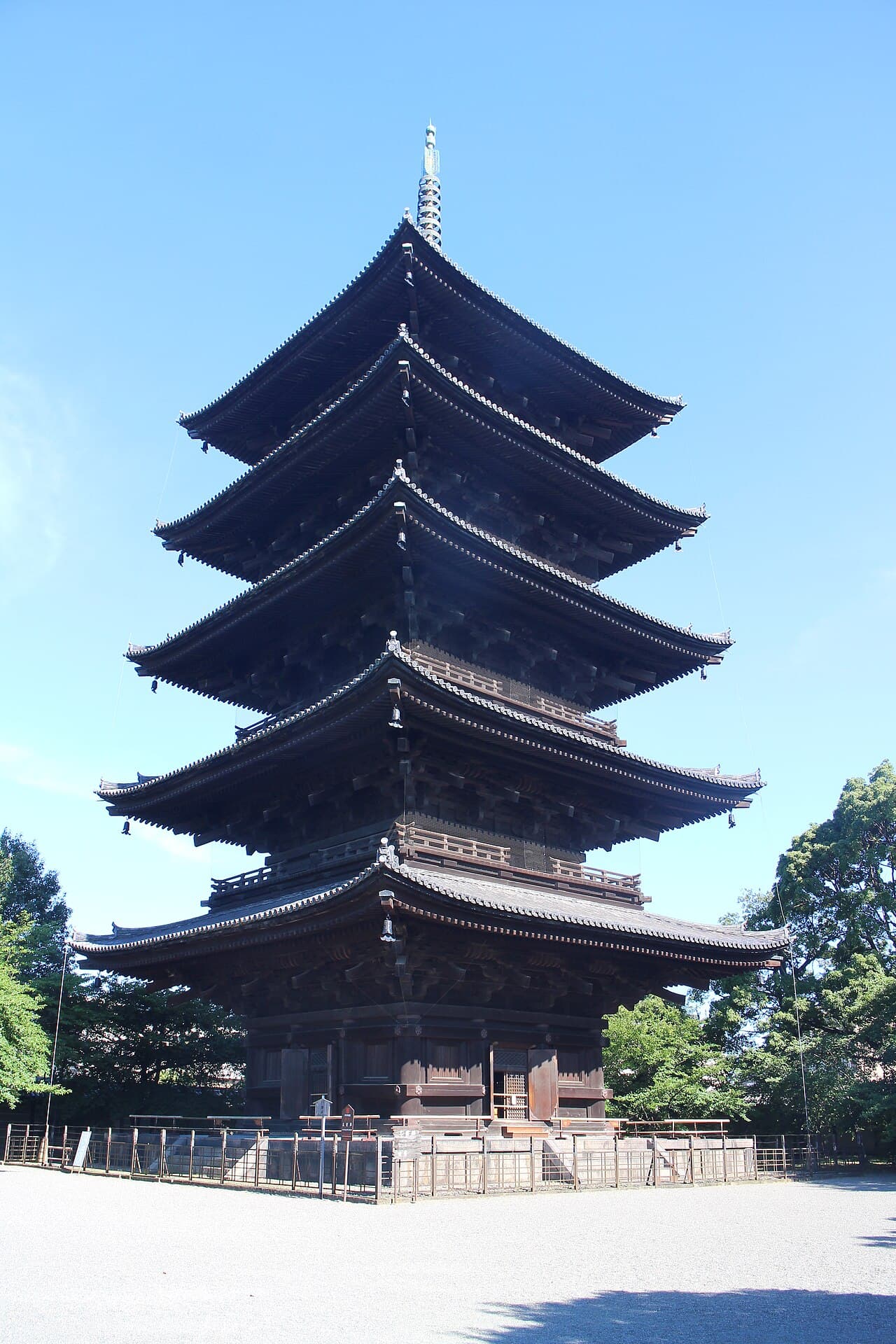
02 Gojunoto
Five-Story Pagoda
A tall wooden landmark and a symbol of the temple.
이 장소의 역사
The pagoda has been rebuilt after fires and now represents continuity as much as original construction.
눈여겨볼 점
- 01
Read the five levels from the ground up.
- 02
Notice the relationship between height and open sky.
- 03
Remember that the interior is not ordinarily a public route.
03 Kondo
Kondo Hall
The main hall for worship and large-scale Buddhist images.
이 장소의 역사
The hall has been rebuilt over time and retains the importance of a central devotional building.
눈여겨볼 점
- 01
Notice the heavy roof and broad proportions.
- 02
Observe how the hall controls light.
- 03
Look for the calm rhythm of columns.
04 Kodo
Kodo Lecture Hall
The place where To-ji's mandala-like sculpture arrangement becomes visible.
이 장소의 역사
The hall's sculptural program expresses Shingon teachings through a carefully ordered group of deities.
눈여겨볼 점
- 01
Look at the arrangement as a group.
- 02
Notice how each figure contributes to the whole.
- 03
Keep voices low inside.
05 Homotsukan
Treasure House
A seasonal display space for works held by the temple.
이 장소의 역사
Objects shown here help explain the temple's long role as a religious and cultural institution.
눈여겨볼 점
- 01
Check the current exhibition before visiting.
- 02
Look for changes in materials and scale.
- 03
Read labels for context rather than collecting objects.
04 / 공식 자료