01 / 이 장소의 역사
From imperial villa to Zen center
Nanzen-ji began when an imperial villa was converted into a Zen temple in the late thirteenth century. It later became one of the most important institutions in the Rinzai tradition. Fires and reconstruction changed the buildings, but the temple retained an expansive layout that allows gates, sub-temples, gardens and mountain air to coexist. A later brick aqueduct adds another historical layer without erasing the Zen structure around it.
02 / 추천 관람 순서
Read the precinct from scale to detail
03 / 안에서 볼 것
안에서 볼 것
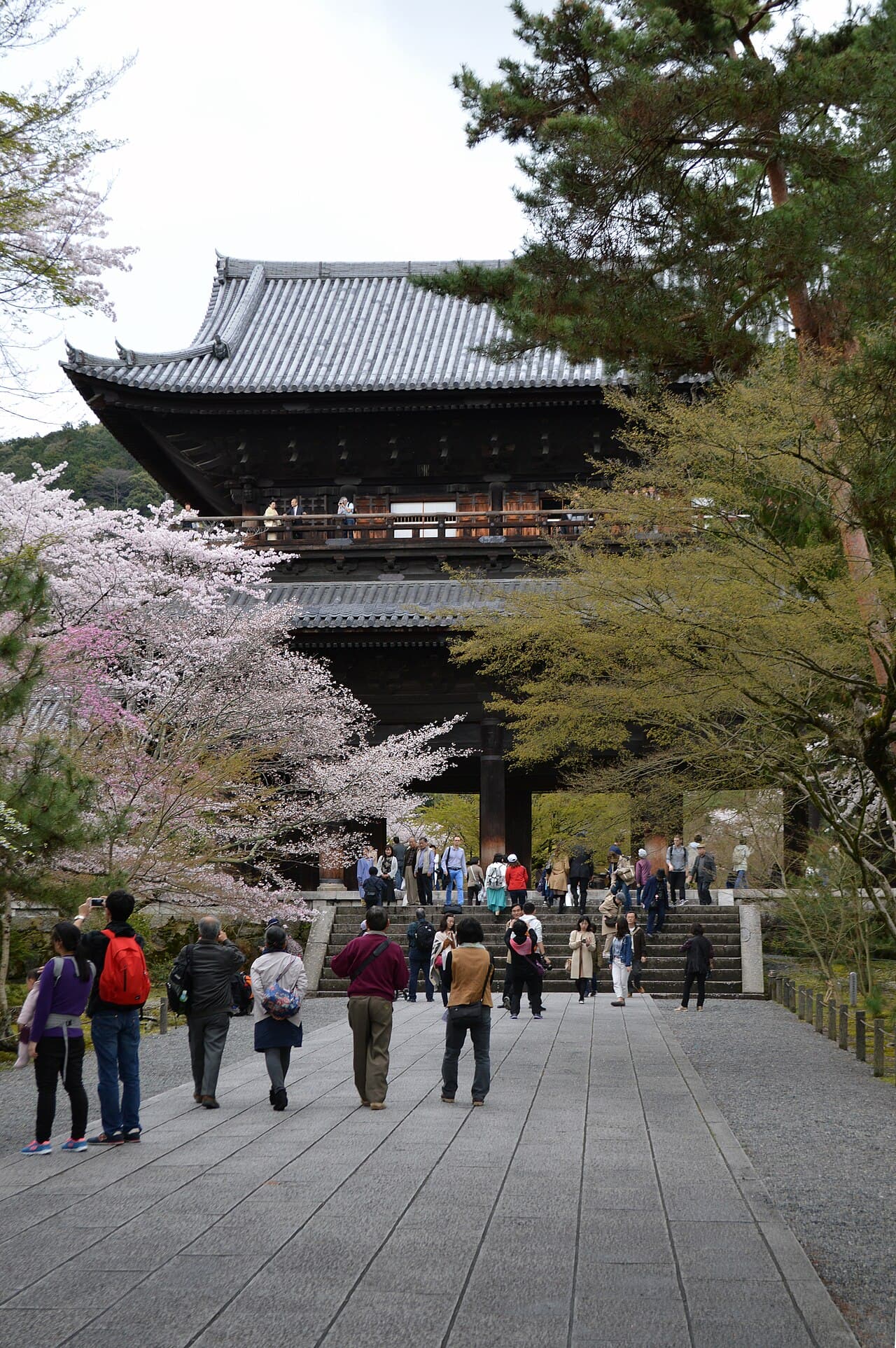
01 Sanmon
Sanmon Gate
A monumental gate that sets the scale of the temple.
이 장소의 역사
The gate was rebuilt in the early Edo period and became associated with both authority and literary memory.
눈여겨볼 점
- 01
Look up through the massive timber frame.
- 02
Notice the broad stone approach.
- 03
Compare the human scale with the roof.
02 Hatto
Hatto Hall
The temple hall used for Zen teaching and ceremonies.
이 장소의 역사
The hall expresses Nanzen-ji's role as a major Rinzai Zen institution and remains an important internal landmark of the precinct.
눈여겨볼 점
- 01
Notice the broad roof and quiet forecourt.
- 02
Check current access and photography rules.
- 03
Keep the approach clear.
03 Hojo
Hojo Abbot's Hall
The abbot's quarters and the interior setting for the temple's principal garden.
이 장소의 역사
The Hojo links Zen residence, teaching and garden viewing in one architectural sequence.
눈여겨볼 점
- 01
Notice the veranda-to-garden threshold.
- 02
Compare formal rooms with open garden space.
- 03
Follow the one-way route.
04 Hojo Garden
Hojo Garden
A Zen garden arranged for contemplation from the abbot's hall.
이 장소의 역사
The garden uses stones, gravel and carefully limited planting to create a field of relationships rather than a scenic panorama.
눈여겨볼 점
- 01
Read the composition from one fixed point.
- 02
Notice empty space between stones.
- 03
Resist searching for one literal picture.
05 Suiro-kaku
Suiro-kaku Aqueduct
A red-brick aqueduct carrying water through the temple grounds.
이 장소의 역사
Built in the Meiji period as part of the Lake Biwa Canal project, it shows how modern infrastructure entered a historic religious landscape.
눈여겨볼 점
- 01
Observe the brick arches and water channel.
- 02
Notice the contrast with timber architecture.
- 03
Look at how the structure follows the slope.
06 Nanzen-in
Nanzen-in Garden
A smaller garden with pond, moss and a more intimate mood within the temple precinct.
이 장소의 역사
The garden preserves the memory of the site before the larger temple complex took its current form.
눈여겨볼 점
- 01
Notice the enclosed scale.
- 02
Compare water and moss with the dry garden.
- 03
Look for a slower transition between rooms and trees.
07 Tenju-an
Tenju-an Garden
A sub-temple garden combining dry and planted spaces within the Nanzen-ji grounds.
이 장소의 역사
Its layout reflects the long development of Zen sub-temples as places of practice, residence and garden culture.
눈여겨볼 점
- 01
Compare the two garden moods.
- 02
Notice the relation between threshold and view.
- 03
Check seasonal opening information.
04 / 공식 자료