FIELD NOTE / EASTERN KYOTO
오토와산 기요미즈데라
기요미즈데라: 도시 위의 무대
참배와 목조 기술, 변화하는 교토 풍경이 함께 빚어낸 사찰입니다.
Higashiyama · Mt. Otowa mid-slope
A clear spring below the hall gave the temple its name. The precinct follows the mountain rather than flattening it.
- 공식 명칭
- 오토와산 기요미즈데라
- DISTRICT
- Higashiyama · Mt. Otowa mid-slope
- FOUNDED
- 778 · Nara period
778 → 1633 → 1994 → NOW
Four moments in the life of a place
- 778Founded on Mt. Otowa
- 1633Most present buildings rebuilt
- 1994Part of the Ancient Kyoto inscription
- NOWA working place of worship and pilgrimage
01 / GROUND
Why a temple on this slope?
音羽山 · Otowa-yama
기요미즈데라는 오토와산의 작은 예배처에서 교토의 주요 참배 사찰로 성장했습니다. 이름은 본당 아래의 맑은 샘에서 유래합니다. 현재 건물들은 화재 뒤 여러 차례 재건되었지만, 문을 지나 천천히 오르고 무대에서 멈춘 뒤 샘으로 내려가는 산사 참배의 흐름은 이어집니다. 나무로 만든 본당 무대는 못을 쓰지 않고 조립되어, 건물 자체가 역사의 일부를 전합니다.
The visit is not a single building in isolation: enter at the gate, climb the precinct, pause at the hall and stage, then descend toward the spring.
Kiyomizu-dera sits on Mt. Otowa in eastern Kyoto. The stage projects from the Main Hall above the steep slope, facing back toward the basin; Otowa Waterfall lies below.
02 / TIMBER ON THE SLOPE
A hall held above the hillside
The Main Hall stands on Mt. Otowa's steep slope. Kake-zukuri extends the building outward on a lattice of timber supports, turning difficult terrain into a place for worship and ceremony.
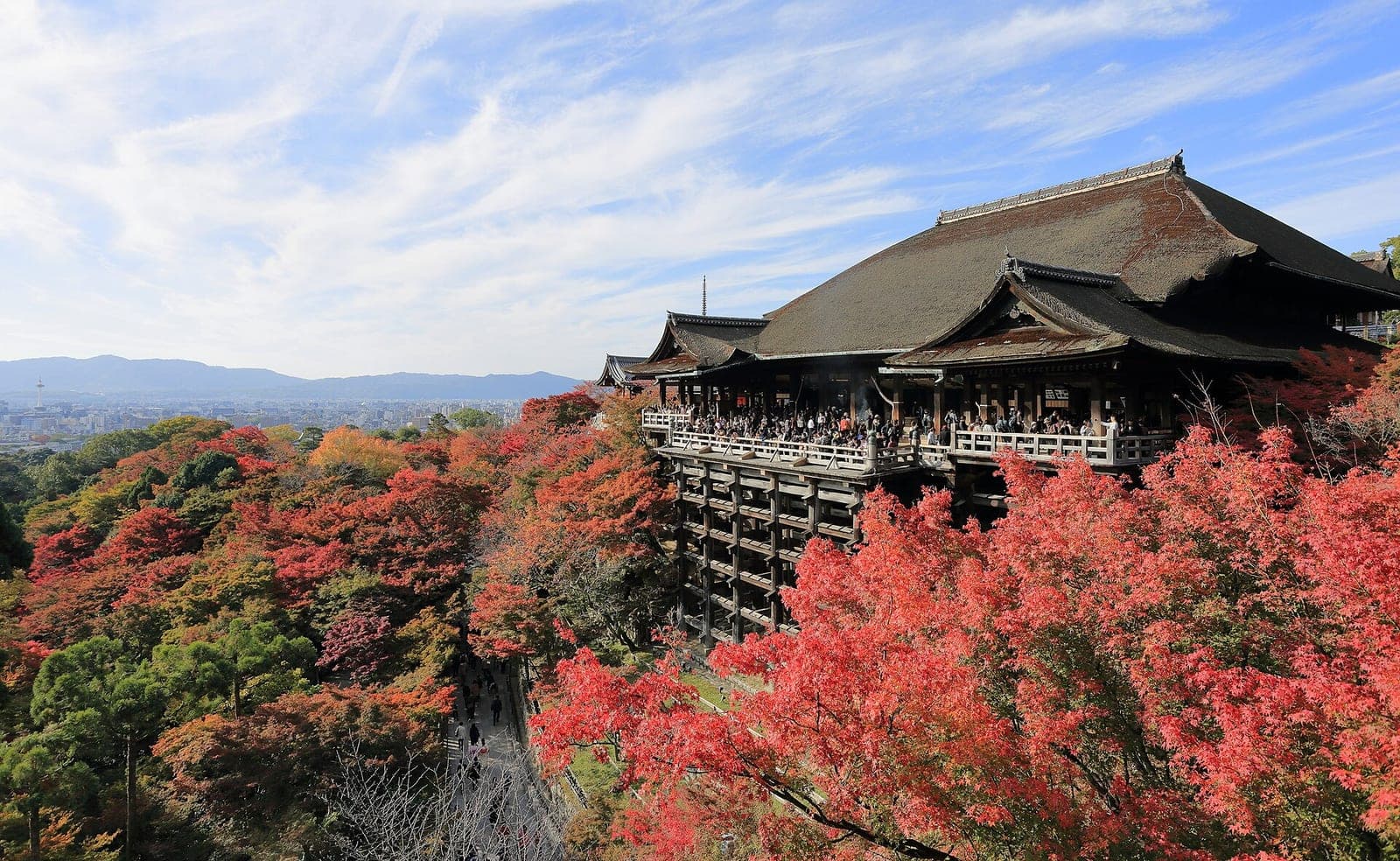

Kake-zukuri · slope construction
≈13 m from the cliff foot to the stage
18 zelkova pillars · joined without nails
From the hillside, the wooden stage projects from the Main Hall above autumn maples.
03 / ON FOOT
What to look at while walking
Read the buildings in walking order: approach, pause, look back, and descend. The route explains how the parts belong together.
01 · Niomon
Niomon Gate
The first strong architectural marker at the top of the approach.
The gate was rebuilt after fire and marks the transition from the city street into the temple precinct.
- Look for the vermilion gate against the mountain slope.
- Notice the guardian figures and the layered roof.
02 · Hondo
Main Hall
The devotional center of the temple, set above the hillside.
The hall enshrines Kannon and has been rebuilt in the traditional timber style after repeated fires.
- Notice the deep eaves and compact worship space.
- Look back toward the roof structure from the side.
03 · Kiyomizu-no-Butai
Kiyomizu Stage
A large wooden veranda projecting above the trees.
Its famous timber frame rests on layered columns and beams rather than modern nails. The stage has hosted ceremonies, performances and seasonal viewing for centuries.
- Study the interlocking timber beneath the platform.
- Notice how the stage frames the city and the trees.
04 · Otowa-no-Taki
Otowa Waterfall
The spring below the main hall that gives the temple its name.
Water from the mountain has long been associated with the temple's founding story and devotional practice.
- Watch how visitors use the long-handled cups.
- Notice the sound of water beneath the timber buildings.
04 / In the same landscape
Read the precinct from gate to spring
From the upper slope, the walk descends through Sannenzaka and Ninenzaka, past Yasaka Pagoda, then on toward Gion.
Upper slope
Otowa-yama · Kiyomizu-dera
Downhill streets
Sannenzaka → Yasaka Pagoda → Gion
ROUTE 01 / HIGASHIYAMA · 東山
Continue on the Higashiyama early walkRead from the primary sources
Kiyomizu-dera · History & the wooden stage ↗Temple grounds and visitor route ↗UNESCO · Ancient Kyoto ↗