01 / 이 장소의 역사
A villa turned into a temple
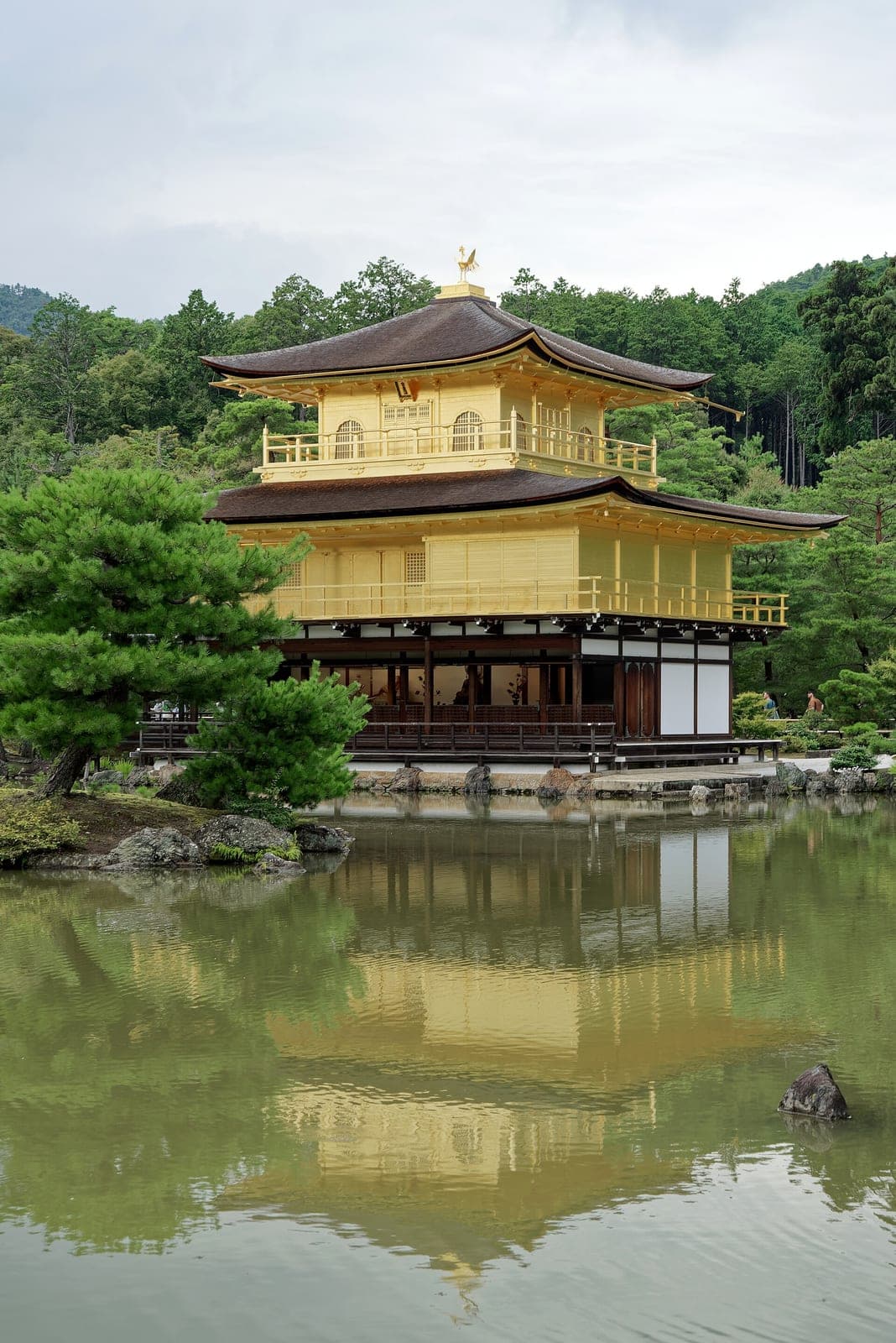
Kinkaku-ji began as the northern villa of Ashikaga Yoshimitsu, whose retirement complex expressed the culture and authority of the Muromachi elite. After his death the site became a Zen temple. The pavilion's three levels use different architectural languages, making the building a compact image of social and religious order. Its famous reflection is carefully staged by the pond, but the historical story is about the changing purpose of the site.
02 / 추천 관람 순서
Read the pavilion, pond and garden together
03 / 안에서 볼 것
안에서 볼 것
01 Rokuhara Entry
Garden Entry
The path that reveals the pavilion gradually rather than all at once.
이 장소의 역사
The approach turns the garden into a sequence of controlled views, a key feature of Japanese landscape design.
눈여겨볼 점
- 01
Notice what remains hidden at first.
- 02
Watch the path curve before the pond opens.
- 03
Keep the route moving.
02 Kyoko-chi
Kyoko-chi Pond
The water surface that holds the pavilion's most famous reflection.
이 장소의 역사
The pond is the compositional center of the garden and a mirror for both building and seasonal landscape.
눈여겨볼 점
- 01
Look for islands and stones around the water.
- 02
Notice how wind changes the image.
- 03
Compare direct view and reflection.
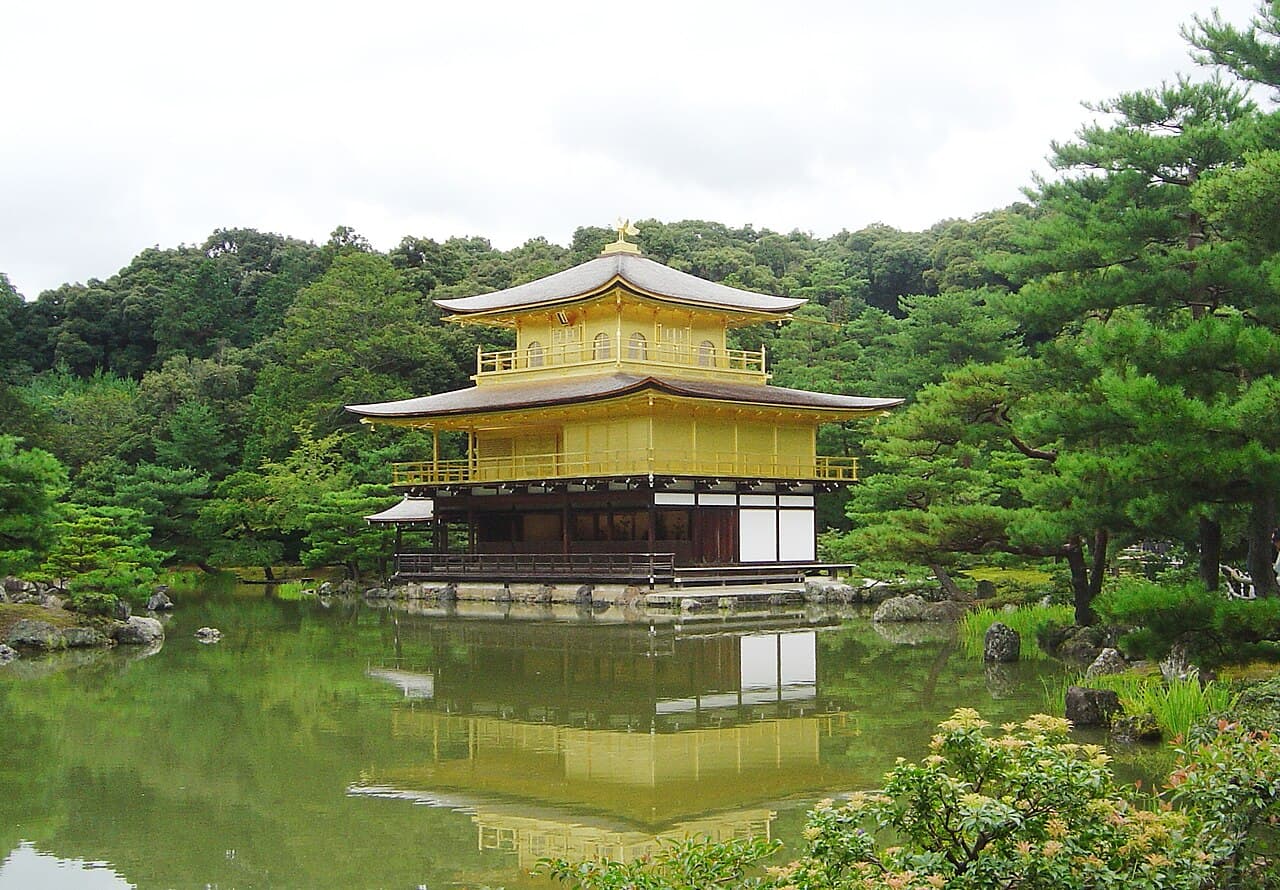
03 Kinkaku
Golden Pavilion
A three-story pavilion with three distinct architectural expressions.
이 장소의 역사
The layers combine palace, samurai and Zen architectural languages, while the gold surface amplifies light and prestige.
눈여겨볼 점
- 01
Read each level separately.
- 02
Notice the roof finial and phoenix.
- 03
Look for light changing across the gold leaf.
04 Anmintaku
Anmintaku Pond
A quieter garden element beyond the main pond.
이 장소의 역사
The smaller water feature and surrounding trees show that the site was designed as a full walking garden, not only a single viewpoint.
눈여겨볼 점
- 01
Notice the change in visual temperature.
- 02
Look for the smaller scale of the scene.
- 03
Listen for the garden's quieter sounds.
05 Garden Path
Garden Exit
The final stretch where the image of the pavilion begins to recede.
이 장소의 역사
A walking garden is also a sequence of leaving. The later path turns attention back toward trees, stone and human movement.
눈여겨볼 점
- 01
Look back only once.
- 02
Notice how the gold disappears behind planting.
- 03
End without rushing to the next stop.
04 / 공식 자료