01 / 이 장소의 역사
A quiet culture after a time of war
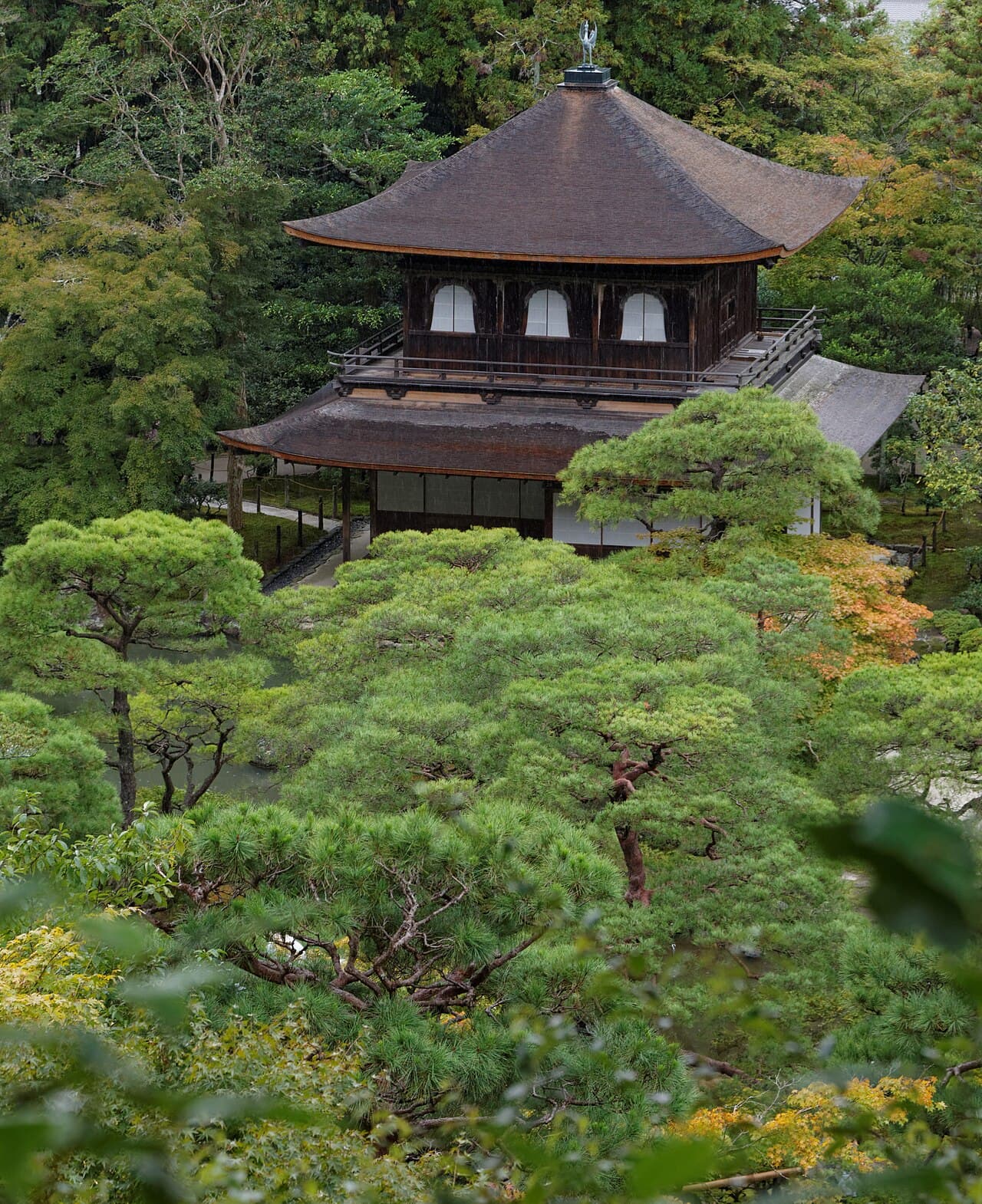
Ginkaku-ji began as the Higashiyama retirement villa of Ashikaga Yoshimasa. Yoshimasa's era was marked by conflict, yet the villa became associated with tea, ink painting, garden design and the refined culture later called Higashiyama culture. The pavilion was intended to be silver but remained unfinished. Over time, weathered wood, moonlit surfaces and carefully composed sand made restraint more important than shine.
02 / 추천 관람 순서
Move from sand to shadow
03 / 안에서 볼 것
안에서 볼 것
01 Sanmon
Temple Gate
A restrained entrance into a garden built around subtle changes.
이 장소의 역사
The approach establishes a quiet scale that differs from more ceremonially bright temple precincts.
눈여겨볼 점
- 01
Notice the modest material palette.
- 02
Look at the relation between wall and planting.
- 03
Enter slowly.
02 Ginshadan
Sea of Silver Sand
A carefully raked sand form that catches changing light.
이 장소의 역사
The sand sculpture is a later garden feature, but it expresses the culture of controlled simplicity associated with the site.
눈여겨볼 점
- 01
Look at the surface from different angles.
- 02
Notice the relationship to the pavilion.
- 03
Do not cross the boundary.
03 Kinkyo-chi
Kinkyo-chi Pond
A pond that carries the garden's softer reflections.
이 장소의 역사
The pond works with the slope and planting to create a walking view rather than one fixed picture.
눈여겨볼 점
- 01
Notice how the path changes the pond.
- 02
Look for reflected trees more than buildings.
- 03
Watch the water surface.
04 Kannondo
Kannon Hall
The pavilion commonly called the Silver Pavilion.
이 장소의 역사
The two levels use different architectural languages and preserve the memory of Yoshimasa's villa culture.
눈여겨볼 점
- 01
Compare the two floors.
- 02
Notice the unpainted wood.
- 03
Look at the roof and phoenix detail.
05 Koke no Niwa
Moss Garden
A shaded garden where moisture and texture replace bright color.
이 장소의 역사
The garden's mossy surfaces embody the later appreciation of age, patina and quiet material change.
눈여겨볼 점
- 01
Look for tiny shifts in texture.
- 02
Notice the shade under trees.
- 03
Walk only on marked paths.
06 Kinkyo-dai
Hillside View
A higher path that opens the garden and surrounding city into one view.
이 장소의 역사
The elevated route shows how the villa used topography to frame both garden depth and distant urban space.
눈여겨볼 점
- 01
Look down at the garden's composition.
- 02
Notice the city beyond the trees.
- 03
Take the climb at an unhurried pace.
07 Ginkaku
Pavilion in Shade
The final view of the pavilion through trees and changing light.
이 장소의 역사
The building's present beauty depends on time: wood, moss, shadow and repair all remain visible.
눈여겨볼 점
- 01
Compare a direct view with the earlier sand view.
- 02
Notice the weathered surfaces.
- 03
Leave the pavilion in the frame of the trees.
04 / 공식 자료