01 / 이 장소의 역사
A shrine that extends up the mountain
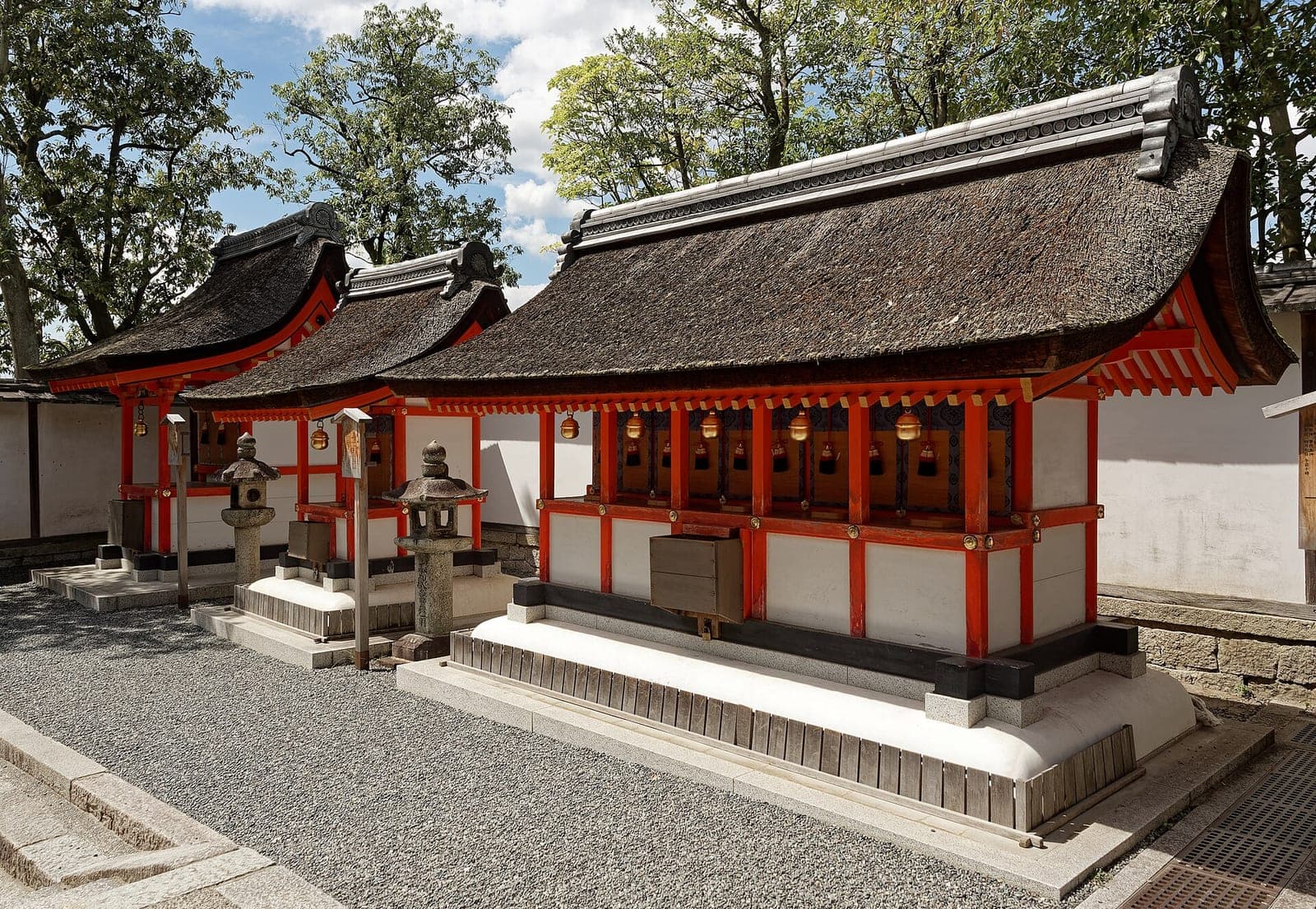
Fushimi Inari is the head shrine of Inari worship in Japan. Inari is associated with rice, harvest, business and protection, and the fox appears here as a messenger rather than a deity itself. Worship developed across the foothills and summit of Mount Inari. The torii were donated over time, so the path is also a record of individual and business devotion. The route becomes quieter as the path rises, and the mountain remains part of the shrine's meaning.
03 / 안에서 볼 것
안에서 볼 것
01
Great Torii
Otorii
The large gateway that announces the shrine precinct from the approach.
이 장소의 역사
The torii marks the transition from ordinary street movement into a space associated with Inari worship and the mountain.
눈여겨볼 점
- 01
Stop before passing through.
- 02
Notice the scale against the surrounding road.
- 03
Keep the center clear for worshippers.

02
Romon Gate
Romon
The formal entrance to the central shrine precinct.
이 장소의 역사
The gate is associated with the shrine's later development and the support of powerful patrons in the early modern period.
눈여겨볼 점
- 01
Compare the gate's scale with the narrow approach.
- 02
Notice the paired fox imagery nearby.
- 03
Watch the flow of worshippers before entering.
03
Outer Worship Hall
Haiden
A worship space that receives visitors before the inner shrine buildings.
이 장소의 역사
The open worship area makes the shrine's public ritual life visible while preserving a deeper boundary around the sacred buildings.
눈여겨볼 점
- 01
Observe how people bow and offer prayers.
- 02
Notice the roof line and open frontage.
- 03
Do not block the offering path.
04
Main Shrine
Honden
The central place for formal worship before the mountain path.
이 장소의 역사
The shrine's principal worship space has been restored repeatedly, as is common for important wooden religious buildings.
눈여겨볼 점
- 01
Observe the roofline and layered ornament.
- 02
Listen for the difference between formal prayer and sightseeing.
- 03
Keep the central approach clear.
05
Omote Sando
Omote Sando
The main approach linking the lower precinct to the famous gates.
이 장소의 역사
The approach organizes the movement from city, through the central shrine, and toward the mountain path.
눈여겨볼 점
- 01
Notice the change from shopfronts to forest.
- 02
Keep walking lanes open.
- 03
Read the route as part of the shrine.

06
Senbon Torii
Senbon Torii
A dense corridor of vermilion gates climbing through the trees.
이 장소의 역사
Each gate represents a donation. The repeated form turns separate acts of devotion into a continuous passage.
눈여겨볼 점
- 01
Read the donor inscriptions on the reverse side.
- 02
Notice the changing light between the gates.
- 03
Walk to the side when stopping for photos.
07
Inner Worship Place
Okusha Hohaisho
A worship point reached after the densest section of torii.
이 장소의 역사
This inner area makes the mountain route feel like a sequence of sacred thresholds rather than a single photo corridor.
눈여겨볼 점
- 01
Notice the quieter pace.
- 02
Follow the signs for the mountain route.
- 03
Leave space around the offering area.
08
Omokaru Stone
Omokaru Ishi
A popular stone associated with a prayer and a felt response.
이 장소의 역사
The practice shows how belief at Fushimi Inari includes small personal rituals alongside formal shrine worship.
눈여겨볼 점
- 01
Follow the posted ritual instructions.
- 02
Do not lift beyond your ability.
- 03
Let others take their turn.
09
Nino-mine
Nino-mine
One of the mountain's summit worship areas.
이 장소의 역사
The named peaks and small shrines extend Inari worship across the whole mountain rather than concentrating it at the entrance.
눈여겨볼 점
- 01
Notice the smaller scale of the worship spaces.
- 02
Watch your footing on the slope.
- 03
Carry water for the climb.
10
Yotsutsuji Viewpoint
Yotsutsuji
A resting point where the lower city opens through the trees.
이 장소의 역사
The viewpoint shows how the shrine route moves between dense urban life and the wooded sacred mountain.
눈여겨볼 점
- 01
Look for the layered horizon rather than one landmark.
- 02
Use the landing as a rest point.
- 03
Notice the shift in sound from the lower path.
11
Ichi-no-mine
Ichi-no-mine
The highest of the main summit worship areas.
이 장소의 역사
The summit continues the mountain's long tradition of sacred sites connected by walking, prayer and offering.
눈여겨볼 점
- 01
Allow time for the descent.
- 02
Keep the summit area quiet.
- 03
Follow current trail signs.
12
Mount Inari Trail
Mount Inari Trail
The forested path that joins the shrine's internal worship points.
이 장소의 역사
The trail is the structure that turns separate shrines, peaks and torii into one continuous sacred landscape.
눈여겨볼 점
- 01
Wear shoes with grip.
- 02
Bring water and plan the return time.
- 03
Respect quiet areas and local worship.