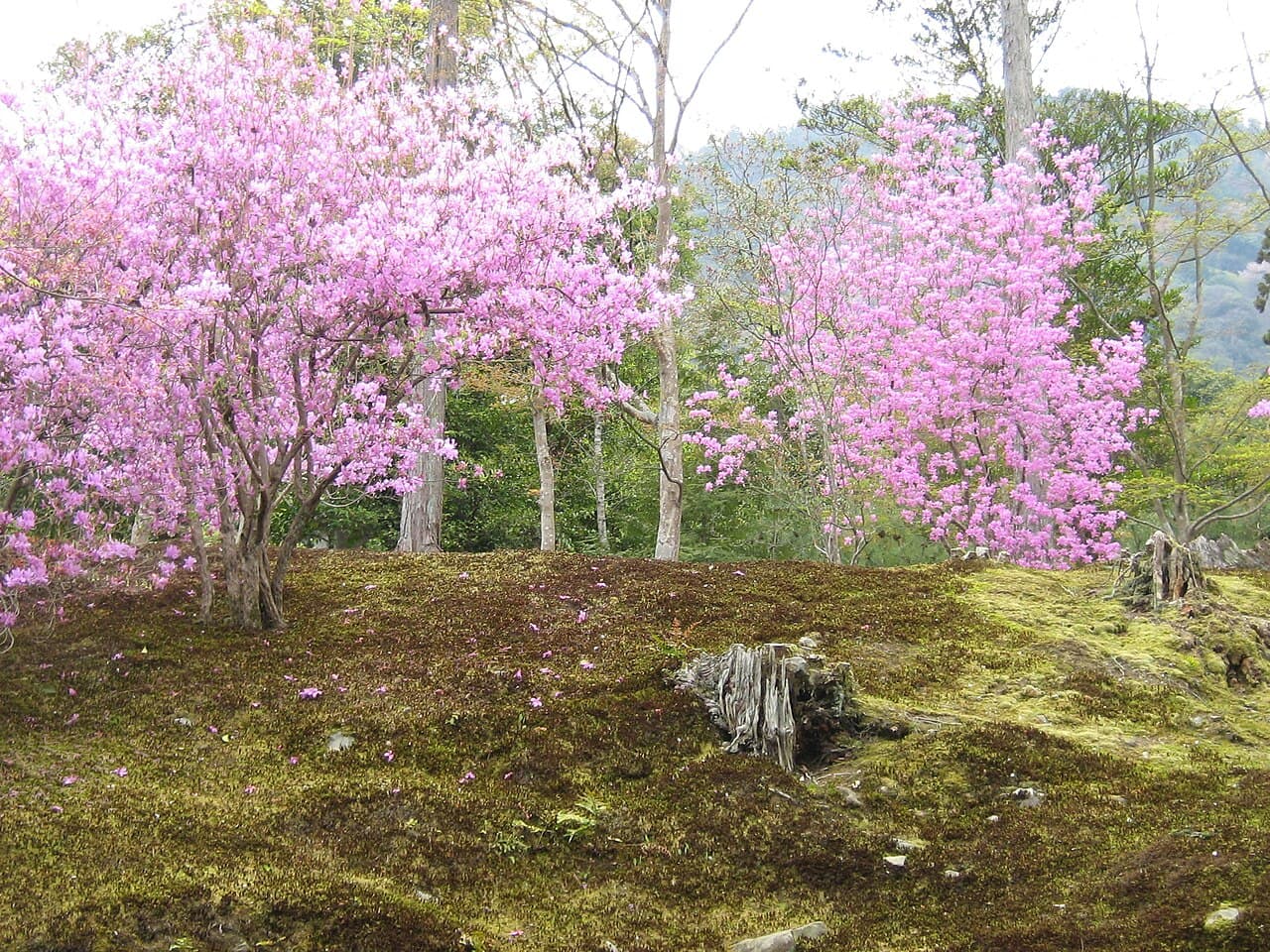
01 / The history of this place
A memorial temple with a landscape mind
Tenryu-ji was established in the Muromachi period as a memorial temple and became one of the leading Zen institutions of Kyoto. Its buildings were repeatedly damaged by fire, while the garden preserved a strong sense of continuity. The central idea is shakkei, or borrowed scenery: the garden does not end at its wall but uses the mountain beyond as part of the composition.
02 / A suggested visit order
Move from hall to garden
03 / What to See Inside
What to See Inside
01 Sanmon
Main Gate
The threshold into the Zen precinct.
The history of this place
The gate establishes a separation between the active town and the ordered temple grounds.
What to notice
- 01
Notice the transition in surface and sound.
- 02
Look along the central axis.
- 03
Enter without blocking the threshold.
02 Hatto
Hatto Hall
A hall used for teaching and major temple ceremonies.
The history of this place
The lecture hall represents the temple's continuing role as a place of Zen instruction and ritual.
What to notice
- 01
Look at the ceiling and its central painting when open.
- 02
Notice the restraint of the interior.
- 03
Check current access rules.
03 Sogenchi Teien
Sogenchi Garden
A pond garden composed with the mountain as a backdrop.
The history of this place
The garden is attributed to Muso Soseki and is among the earliest surviving examples of this landscape tradition.
What to notice
- 01
Read the pond from the veranda first.
- 02
Notice rocks, islands and borrowed scenery together.
- 03
Look for asymmetry rather than a centered view.
04 Unryu-zu
Cloud Dragon Painting
A powerful image associated with the teaching hall.
The history of this place
The dragon is a Buddhist and Zen symbol, and the painting turns the ceiling into an active field of attention.
What to notice
- 01
Check whether the painting is currently on display.
- 02
Notice the direction of the dragon's movement.
- 03
Stand where the composition changes.
05 Shakkei Edge
Garden Edge
The place where planted space meets the borrowed mountain.
The history of this place
The edge makes the principle of borrowed scenery visible: the garden uses what is beyond its own boundary.
What to notice
- 01
Trace the line from pond to mountain.
- 02
Notice how the wall disappears visually.
- 03
Compare near and distant textures.
04 / Official sources