Skip to content
KWKyoto WayfinderAn independent Kyoto travel guide
Back to History Stories

Independent place histories

Sanzen-in: Stillness in a Mountain Village

A monzeki temple where moss, cedar and seasonal change carry the history.

Official name
魚山 三千院門跡
Place type
Tendai Buddhist monzeki temple
Established / formed
The temple tradition traces back to the Heian period; it settled in Ohara in the late nineteenth century.

01

The history of this place

Sanzen-in belongs to a tradition of temples where aristocratic and imperial connections met Buddhist practice. Ohara's mountain setting made it a place for prayer, study and retreat. The present visit is carried by the relationship between dark timber, moss gardens and open seasonal light. The history is felt through the pace of the grounds rather than through a single monumental building.

02

A suggested visit order

  1. 01Imperial Gate
  2. 02Guest Hall
  3. 03Shinden Hall
  4. 04Shuheki-en Garden
  5. 05Yuusei-en Garden
  6. 06Ojo Gokuraku-in
  7. 07Amida Triad
  8. 08Moss Jizo Figures
  9. 09Moss Path
  10. 10Bamboo Grove
  11. 11Seasonal Maple Grove

03

What to See Inside

A place shaped by retreat

01What to See Inside

01

Imperial Gate

Imperial Gate

Place type

The first threshold into the monzeki temple grounds.

The history of this place

The entrance preserves the temple's historical association with aristocratic and imperial Buddhist lineages.

What to notice

  • Notice the controlled scale of the entrance.
  • Look at the timber and roof details.
  • Check the current visitor route.

On-location guide

The gate sets the tone for Sanzen-in: the visit moves from formal threshold into a sheltered mountain garden.

02What to See Inside

02

Guest Hall

Kyakuden

Place type

A reception space that frames the garden from inside.

The history of this place

The hall connects formal hospitality with the temple's practice of viewing landscape through a quiet interior threshold.

What to notice

  • Look from the tatami edge toward the garden.
  • Notice the change between interior shadow and moss light.
  • Keep the room silent.

On-location guide

Before walking outside, let the garden arrive through the room. Sanzen-in is built around this exchange between timber and living landscape.

03What to See Inside

03

Shinden Hall

Shinden

Place type

A formal hall that introduces the temple's monzeki character.

The history of this place

The hall reflects the temple's connection with aristocratic and imperial Buddhist culture.

What to notice

  • Notice the formal proportions.
  • Look out toward the garden rather than only at the room.
  • Observe the relationship between tatami and view.

On-location guide

The first interior view gives the temple its social context: this is a place of religion, but also of courtly culture.

04What to See Inside

04

Shuheki-en Garden

Shuheki-en

Place type

A garden that opens the visit into water, stone and seasonal planting.

The history of this place

The garden is part of Sanzen-in's long tradition of combining devotional space with carefully composed retreat landscapes.

What to notice

  • Notice water beside moss and stone.
  • Compare the open pond with the darker garden path.
  • Look for framed views between trees.

On-location guide

This is not a single postcard view. Let the garden move between brightness, water and shade as you walk.

05What to See Inside

05

Yuusei-en Garden

Yuusei-en

Place type

A moss garden beneath tall trees.

The history of this place

The garden's quiet character comes from long-term shade, moisture and careful maintenance rather than decorative excess.

What to notice

  • Look for multiple greens, not one color.
  • Notice the ground as carefully as the trees.
  • Move slowly around the edge.

On-location guide

Moss records time. Its surface changes gently, so the garden rewards looking down as much as looking out.

06What to See Inside

06

Ojo Gokuraku-in

Ojo Gokuraku-in

Place type

A small hall with an intimate devotional scale.

The history of this place

The hall is associated with Pure Land belief and gives the garden a human-sized spiritual center.

What to notice

  • Notice the low roof and compact scale.
  • Study the approach through the trees.
  • Keep the entrance clear.

On-location guide

The small hall is easy to miss if you only look for spectacle. Its power comes from the way it sits inside the garden.

07What to See Inside

07

Amida Triad

Amida Sanzon

Place type

The devotional image group associated with Ojo Gokuraku-in.

The history of this place

The triad gives the small hall its religious focus and connects the intimate building to Pure Land Buddhist practice.

What to notice

  • Check current photography rules.
  • Observe the image from the permitted position.
  • Keep the hall quiet.

On-location guide

The room is small because the point is concentration. Let the image, roof and surrounding garden remain one setting.

08What to See Inside

08

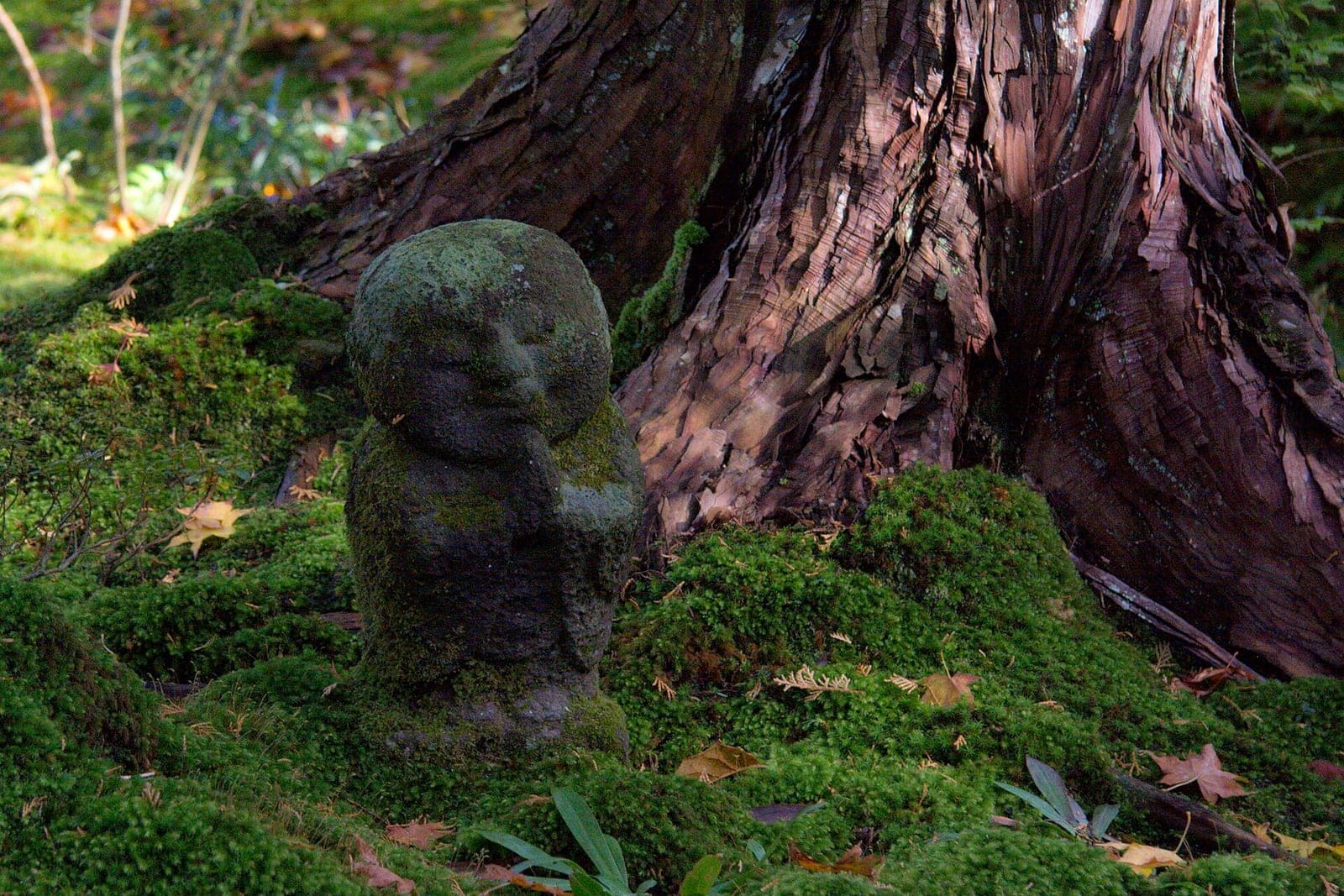
Moss Jizo Figures

Warabe Jizo

Place type

Small figures set within the moss landscape.

The history of this place

The figures connect everyday devotion with the contemplative garden setting.

What to notice

  • Look for the contrast of stone and moss.
  • Notice different expressions and scale.
  • Do not touch or move offerings.

On-location guide

These small figures are not decoration. They bring the large landscape back to individual care and prayer.

Moss Path

Photo: Wikimedia Commons · Motokoka · CC BY-SA 4.0

09

Moss Path

Koke no Michi

Place type

A path where moisture and shade shape the visual rhythm.

The history of this place

The path reflects the mountain climate that made Ohara a place of retreat.

What to notice

  • Notice water, shade and stone together.
  • Listen for small changes in sound.
  • Avoid stepping off the route.

On-location guide

Follow the path as a sequence of textures. The garden is telling you about climate as much as about design.

10What to See Inside

10

Bamboo Grove

Takebayashi

Place type

A narrow grove that changes the sound and scale of the garden.

The history of this place

Bamboo and cedar reinforce the sense of a mountain retreat where managed grounds meet the surrounding woodland.

What to notice

  • Notice the vertical rhythm.
  • Listen for wind through the leaves.
  • Stay on the marked path.

On-location guide

The bamboo is not a separate attraction. Within Sanzen-in it is another way the mountain enters the temple grounds.

11What to See Inside

11

Seasonal Maple Grove

Momiji Grove

Place type

Trees that make the same garden change through the year.

The history of this place

Seasonal viewing has long shaped how Japanese gardens are experienced and remembered.

What to notice

  • Compare new leaves, deep green and autumn color.
  • Look at light on the trunks.
  • Return mentally to the same view in another season.

On-location guide

This is a temple whose history is repeated every year. The garden is never exactly the same twice.

Official sources