Skip to content
KWKyoto WayfinderAn independent Kyoto travel guide
Back to History Stories

Independent place histories

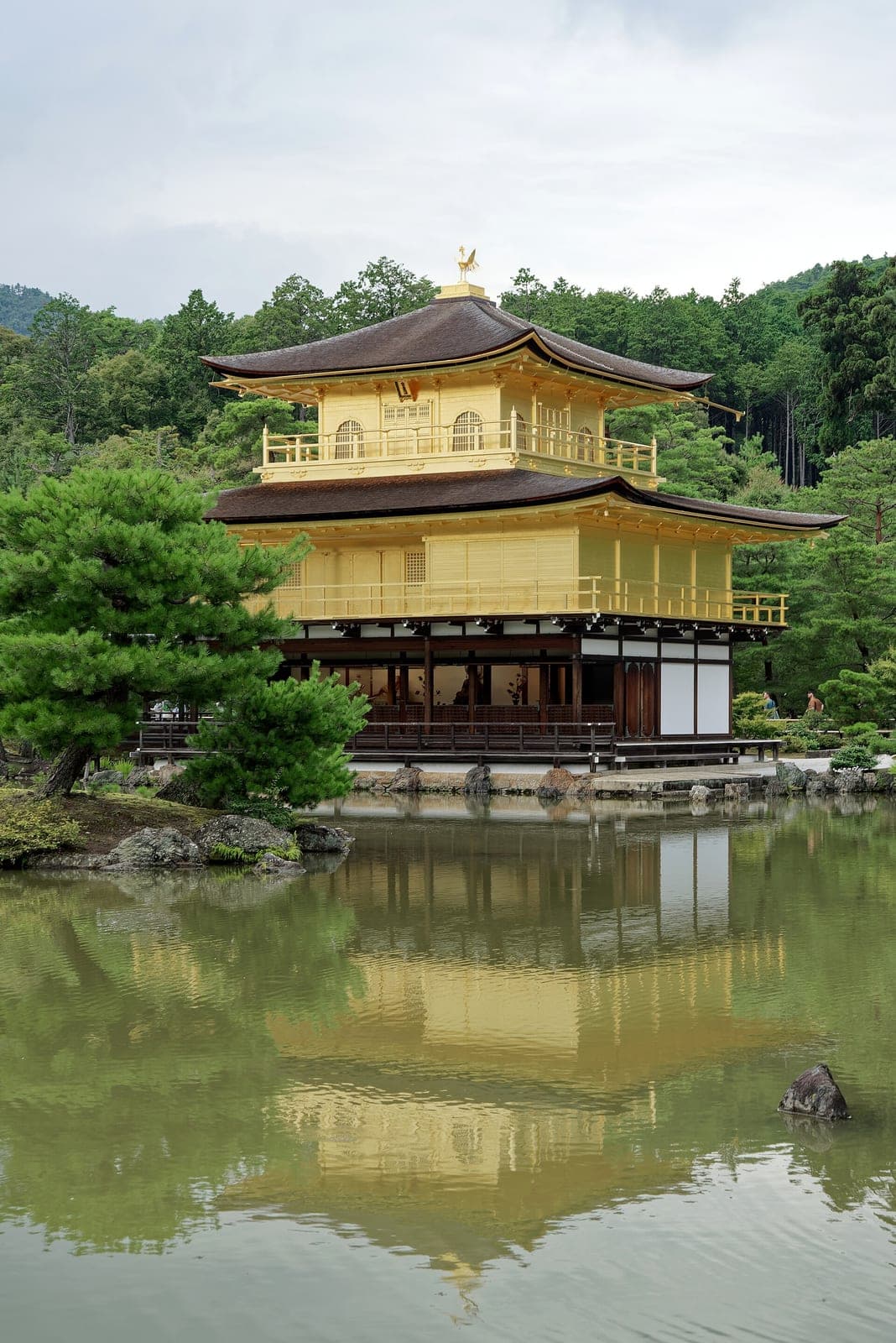
Kinkaku-ji: A Pavilion of Reflected Power

A lakeside pavilion where architecture, reflection and political ambition meet.

Official name
鹿苑寺 金閣
Place type
Zen temple and garden
Established / formed
The villa was completed in 1397; the present pavilion was rebuilt after fire.

01

The history of this place

Kinkaku-ji began as the northern villa of Ashikaga Yoshimitsu, whose retirement complex expressed the culture and authority of the Muromachi elite. After his death the site became a Zen temple. The pavilion's three levels use different architectural languages, making the building a compact image of social and religious order. Its famous reflection is carefully staged by the pond, but the historical story is about the changing purpose of the site.

02

A suggested visit order

  1. 01Garden Entry
  2. 02Kyoko-chi Pond
  3. 03Golden Pavilion
  4. 04Anmintaku Pond
  5. 05Garden Exit

03

What to See Inside

A villa turned into a temple

01What to See Inside

01

Garden Entry

Rokuhara Entry

Place type

The path that reveals the pavilion gradually rather than all at once.

The history of this place

The approach turns the garden into a sequence of controlled views, a key feature of Japanese landscape design.

What to notice

  • Notice what remains hidden at first.
  • Watch the path curve before the pond opens.
  • Keep the route moving.

On-location guide

The first view is designed. The garden makes anticipation part of the architecture.

02What to See Inside

02

Kyoko-chi Pond

Kyoko-chi

Place type

The water surface that holds the pavilion's most famous reflection.

The history of this place

The pond is the compositional center of the garden and a mirror for both building and seasonal landscape.

What to notice

  • Look for islands and stones around the water.
  • Notice how wind changes the image.
  • Compare direct view and reflection.

On-location guide

The reflection is never fixed. It is a record of weather, light and the visitor's position.

03

Golden Pavilion

Kinkaku

Place type

A three-story pavilion with three distinct architectural expressions.

The history of this place

The layers combine palace, samurai and Zen architectural languages, while the gold surface amplifies light and prestige.

What to notice

  • Read each level separately.
  • Notice the roof finial and phoenix.
  • Look for light changing across the gold leaf.

On-location guide

The pavilion is not one style. Its historical meaning is in the deliberate stacking of different worlds.

04What to See Inside

04

Anmintaku Pond

Anmintaku

Place type

A quieter garden element beyond the main pond.

The history of this place

The smaller water feature and surrounding trees show that the site was designed as a full walking garden, not only a single viewpoint.

What to notice

  • Notice the change in visual temperature.
  • Look for the smaller scale of the scene.
  • Listen for the garden's quieter sounds.

On-location guide

Move beyond the famous image. The rest of the garden explains how the pavilion was meant to be experienced.

05What to See Inside

05

Garden Exit

Garden Path

Place type

The final stretch where the image of the pavilion begins to recede.

The history of this place

A walking garden is also a sequence of leaving. The later path turns attention back toward trees, stone and human movement.

What to notice

  • Look back only once.
  • Notice how the gold disappears behind planting.
  • End without rushing to the next stop.

On-location guide

A good visit ends when the pavilion is no longer in view. Let the garden close the story.

Official sources